Shingles come standard on every home we build, and for most Valley families they are a sound choice. A metal roof adds about $5 per square foot of home for R Panel and $9 for standing seam. What you buy is mainly a longer service life and, sometimes, better insurance terms, more than a lower electric bill. Before you decide, ask your insurer how each roof changes your premium, deductible and hail coverage.
What does each roof cost with us?
Every Fully Loaded home includes a 30 year shingle roof. Metal is an upgrade, priced per square foot of home so you can do the arithmetic yourself:
| Roof | Added cost | 1,800 sq ft home | 2,500 sq ft home |
|---|---|---|---|
| 30 year shingles | Included | $0 | $0 |
| R Panel metal | +$5 / sq ft | +$9,000 | +$12,500 |
| Standing seam metal | +$9 / sq ft | +$16,200 | +$22,500 |
These figures are approximate, and your final number is confirmed in writing once your blueprints are finished, before it goes into the contract. Every other line is in the 2026 cost guide.
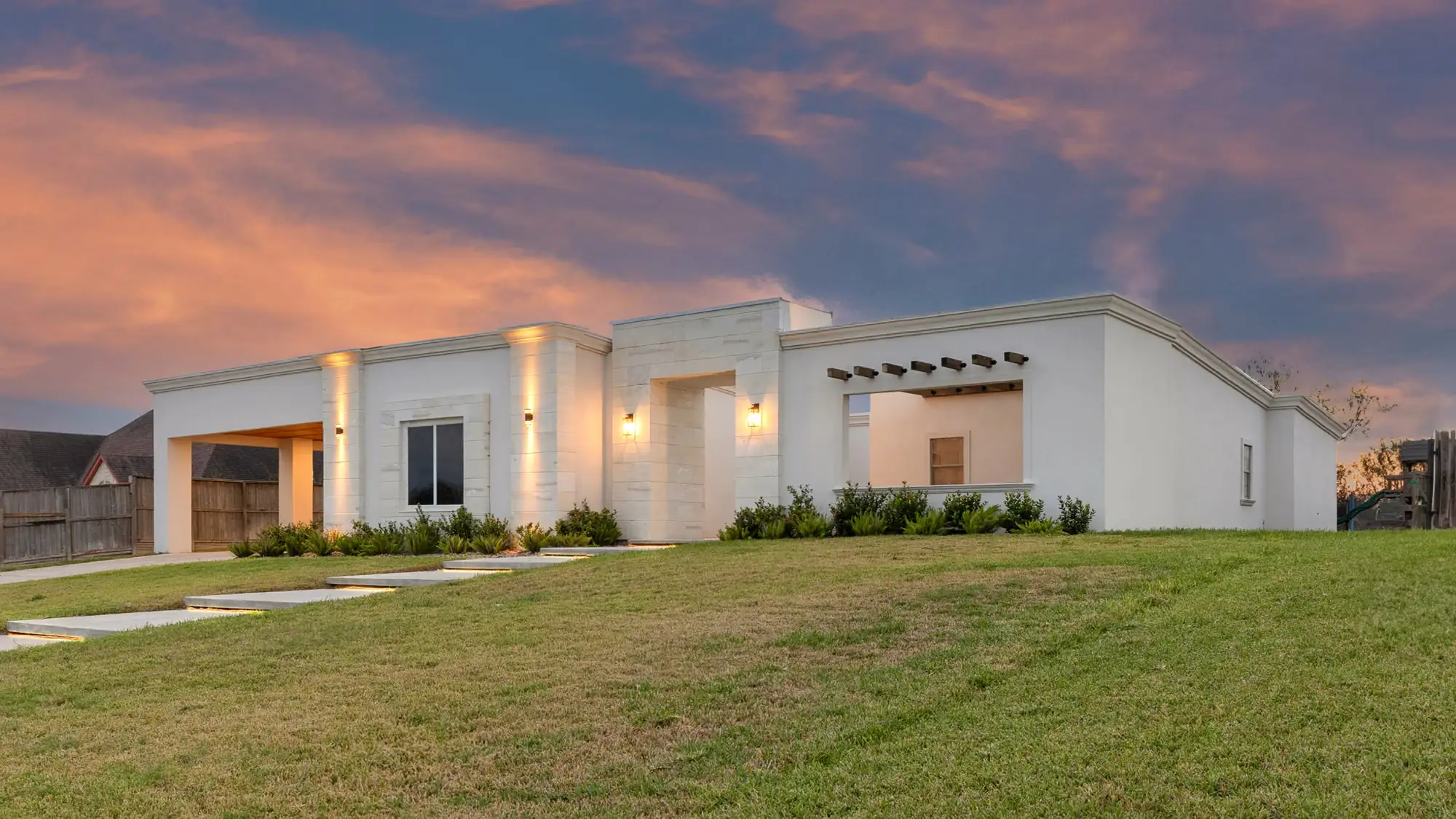
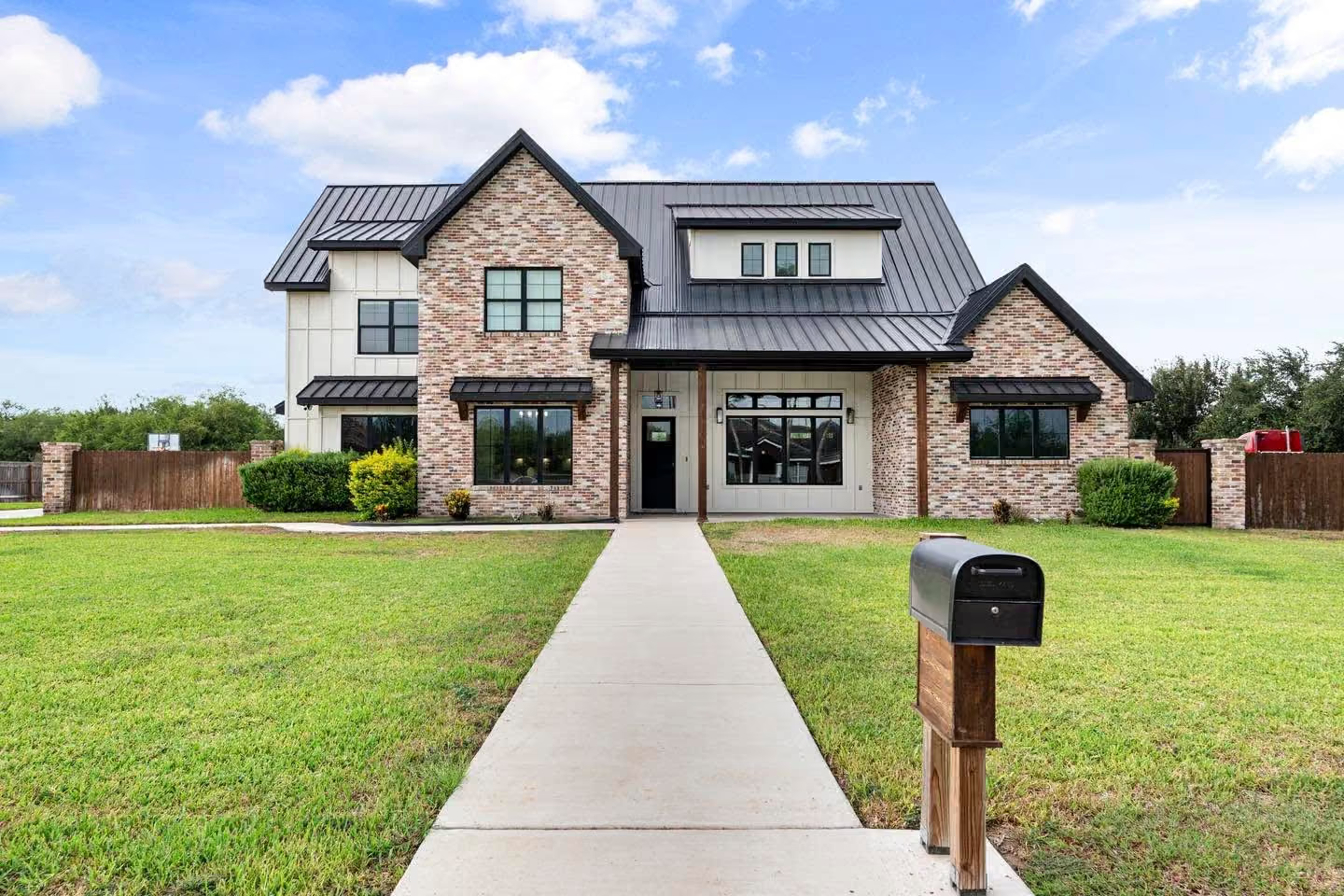
The two metal options are different systems. R Panel is a ribbed panel screwed through its face, so the fasteners stay exposed, and those screws and washers become a maintenance item over the years. Standing seam hides its fasteners under raised seams, with clips that let the panels move as they heat and cool. It costs more and reads cleaner, which is why you see it on homes like our modern farmhouse with brick accents.
How long does each roof last?
Be careful with the numbers here, because most come from people selling roofs. A long running NAHB study put asphalt shingles at about 20 years nationally. The metal industry commonly quotes 40 years or more for steel, and 15 to 25 years for shingles in hot climates. We have not found an independent study of steel roofs in a climate like ours, so treat those as a rough guide, not a promise.
The “30 year” on a shingle is a product name, not a forecast for a roof that spends decades under Valley sun. Still, the direction is clear: metal generally outlasts shingles. The honest question is how long you will own the home. If you plan to stay twenty years or more, you may avoid one reroof. If you plan to sell in eight, it is harder to count on getting the upgrade back.
Does a metal roof lower the electric bill?
Less than most people expect, in a home built the way ours are. The Department of Energy says cool roofs save the most in hot climates, and that a reflective roof can run more than 50°F cooler than a dark one. It also says a well insulated roof benefits less than a poorly insulated one.
Two things follow:
- Color and reflectivity do the work, not the word metal. A dark metal roof is not a cool roof.
- Insulation comes first. Every home we build has open cell spray foam insulation throughout and an attic radiant barrier, so a reflective roof has less left to fix.
Choose metal for durability and looks. If you want the efficiency too, pick a light, reflective finish. Our guide to what lowers a Valley electric bill ranks the bigger levers.
How do they hold up to wind?
Both can be built well, and both can fail. Installation and product matter more than the category.
- Shingles carry wind classes under two tests. The strongest common classes are Class F in ASTM D3161, tested at 110 mph, and Class H in ASTM D7158.
- Metal panels are tested under UL 580 and ASTM E1592. A rating belongs to a specific panel with a specific fastening, not to metal roofs in general, so ask for the test report.
A FEMA study of about 200 Florida homes after Hurricane Ian, reported by WUSF, found damage on 90% of homes with roofs installed before 2015 and 28% of those installed after, and metal panel roofs were far less likely to be damaged. One storm in another state is not a verdict, but the lesson travels: a newer roof, properly fastened, matters most.
In Cameron County, the roof also has to meet the state windstorm program, whichever material you choose. See our guide to windstorm certification.
What about salt air?
Steel panel warranties can be limited by distance from salt water. Inland Valley lots sit well outside those limits; coastal lots may not. One manufacturer’s bulletin sets 1,500 feet from a coastline with surf, 800 feet from a large saltwater bay and 400 feet from saltwater marshes or canals, and other makers set different limits. If your lot is near the Laguna Madre, get the warranty terms in writing for your address.
Hail and insurance: what should I ask?
This is where the decision often gets made, and it depends on your insurer, not on us.
- Impact resistance. The Texas Department of Insurance says insurers might give you a discount for materials less likely to be damaged. Credits are set company by company, and UL 2218 Class 4 is the top impact rating.
- New guidance. In September 2026, TDI encouraged insurers to offer meaningful discounts for mitigation, naming impact resistant roofing and IBHS FORTIFIED, without setting an amount.
- Cosmetic damage. Some policies exclude dents that do not let water in, and the exclusion can come with the discount. A hailstorm that dimples a metal roof may be yours to live with.
- Actual cash value. “As roofs age, some companies will switch to actual cash value,” TDI warns. In its example of a $10,000 roof with a $4,000 deductible, the insurer pays $4,500 at five years, $3,000 at ten and nothing at twenty.
Before you pick, get written quotes on the same house with each roof, and ask three questions: what is the premium and the wind and hail deductible, is cosmetic damage excluded, and at what age does the roof move to actual cash value? If your insurer credits impact resistant shingles, ask us to price them too.
Which one fits your home?
| If this matters most | Lean toward |
|---|---|
| Lowest cost today | 30 year shingles |
| A simple metal look at a lower price | R Panel |
| Long term ownership and a clean modern line | Standing seam |
| Lowest insurance cost | Whatever your own quotes show |
Frequently asked questions
Can I switch to metal later?
Yes, but it becomes a separate reroofing job, with the old roof removed and disposed of. If you already know you want metal, the time to decide is during design, when the upgrade is priced into the contract.
Does a metal roof change the wind rules in Cameron County?
No. The windstorm program applies to the roof covering whichever material you choose, so the product and its fastening have to meet the applicable code either way.
Ready to price both? Schedule a consultation and we will put the two options side by side for your plan.