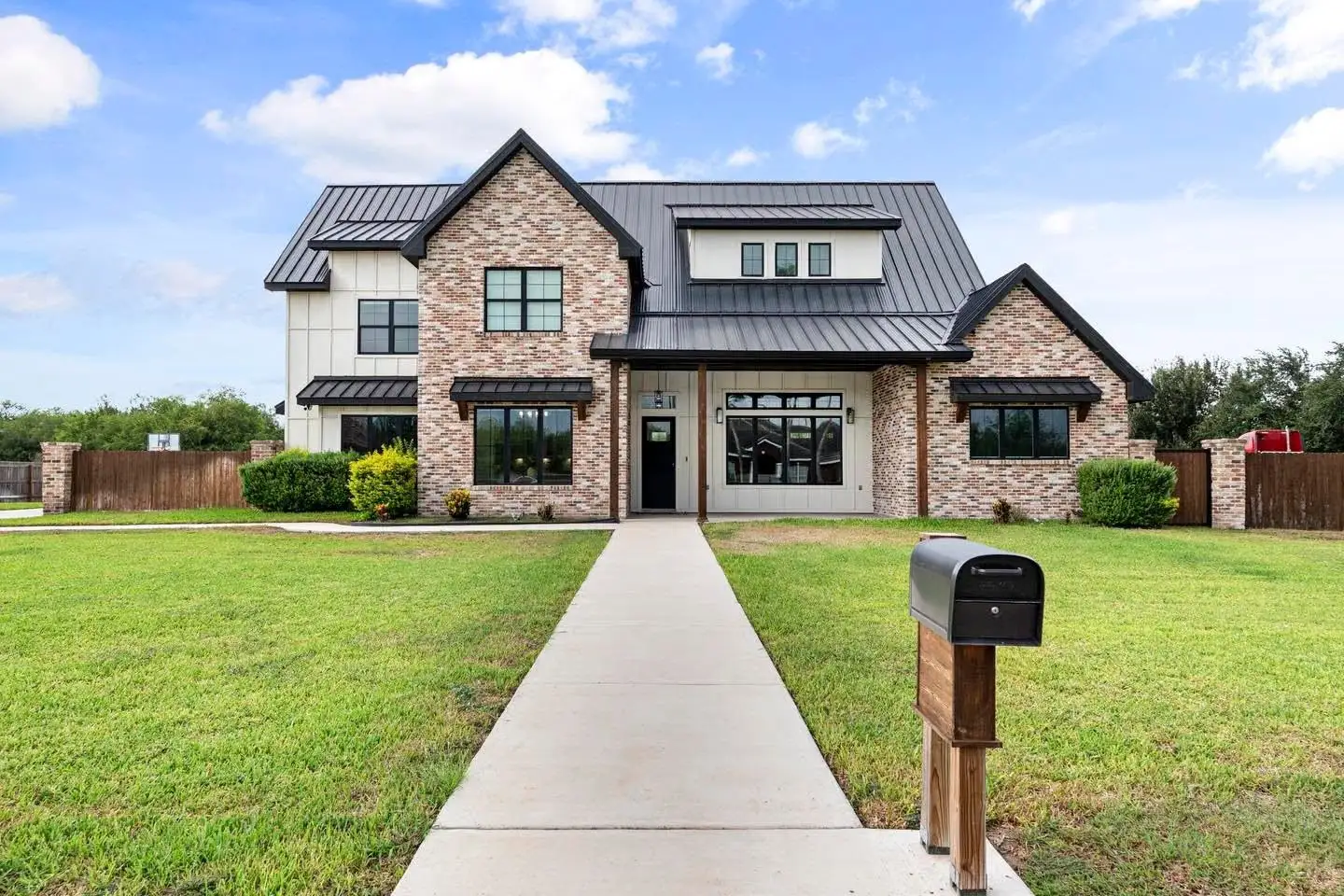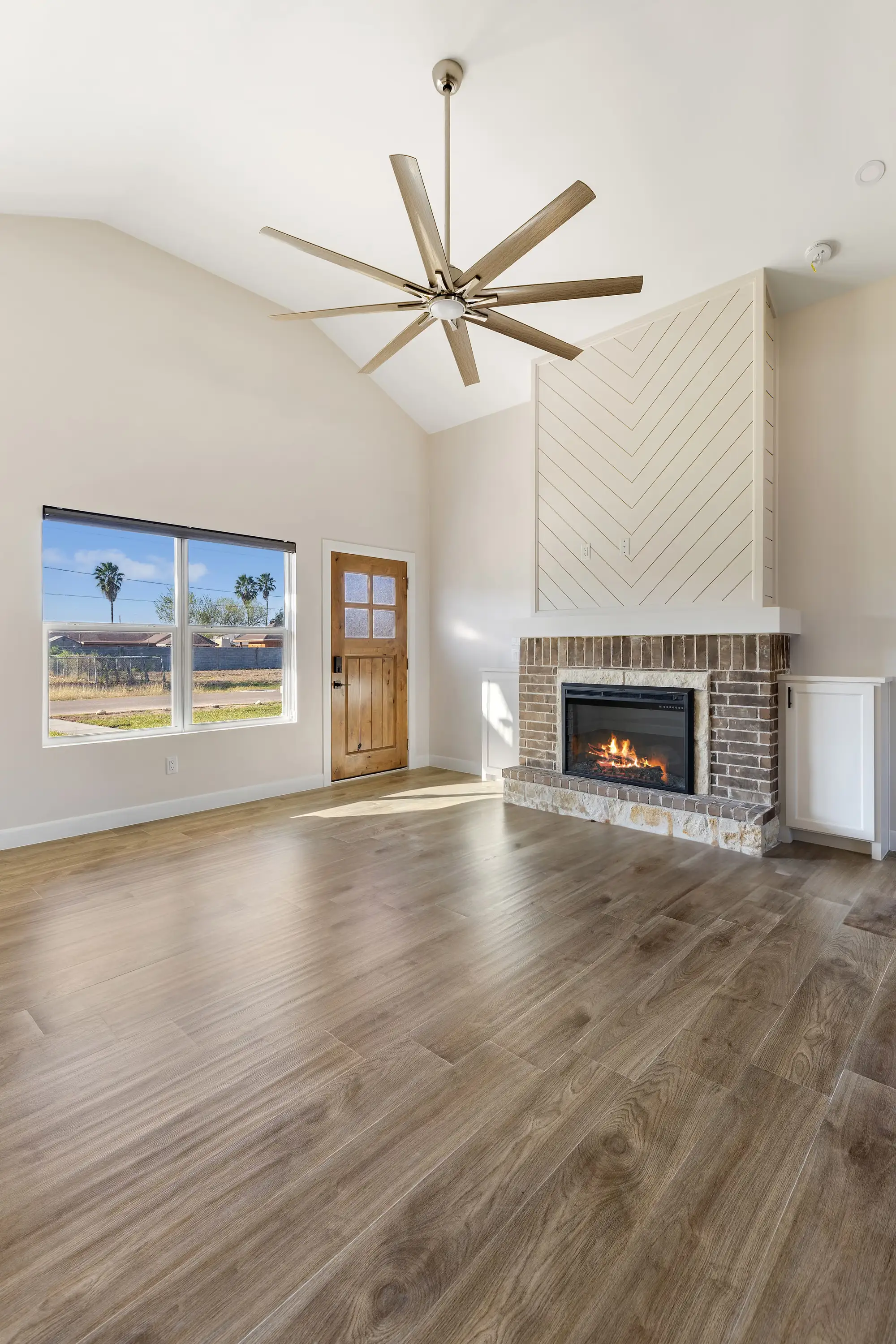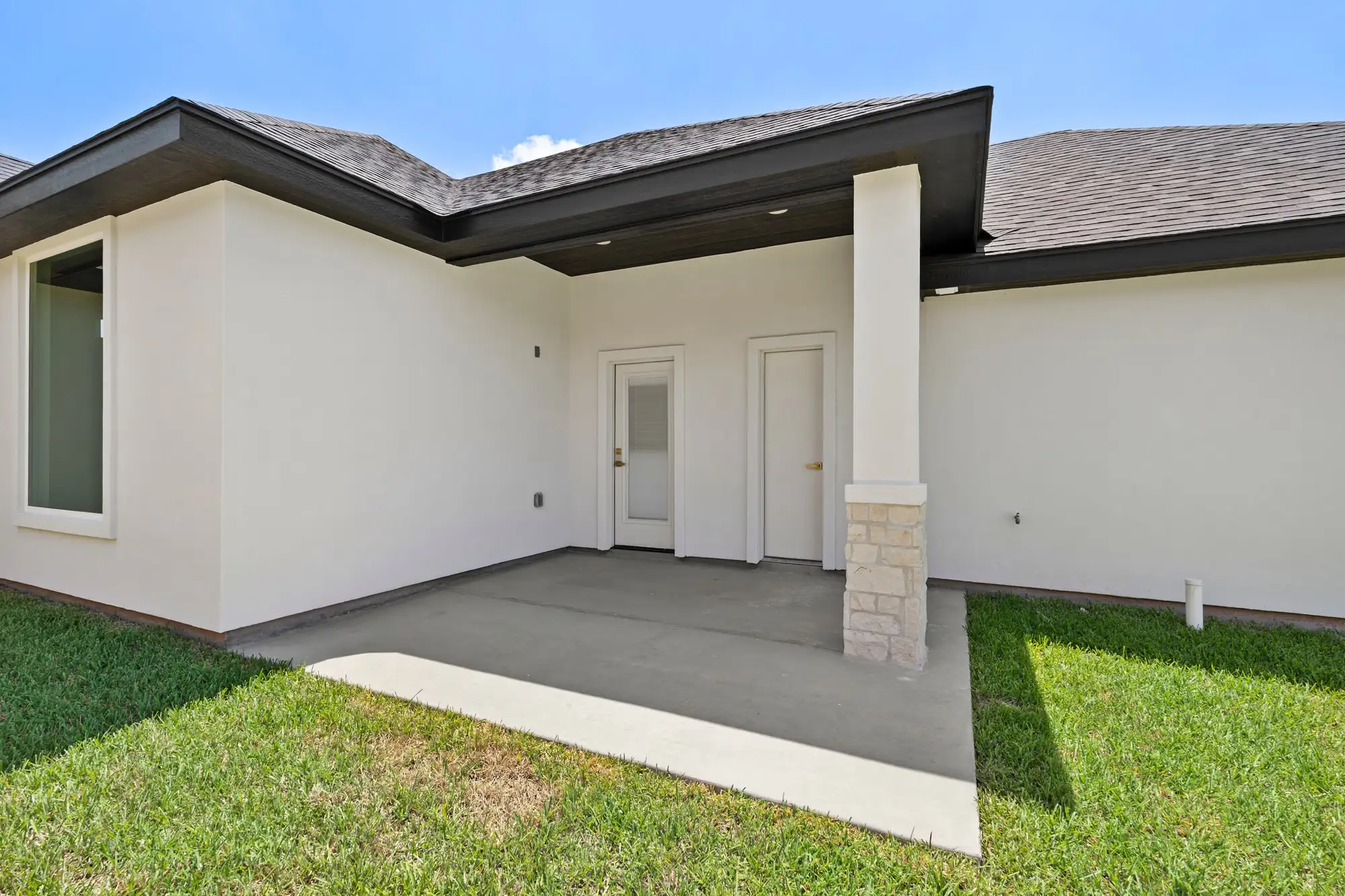
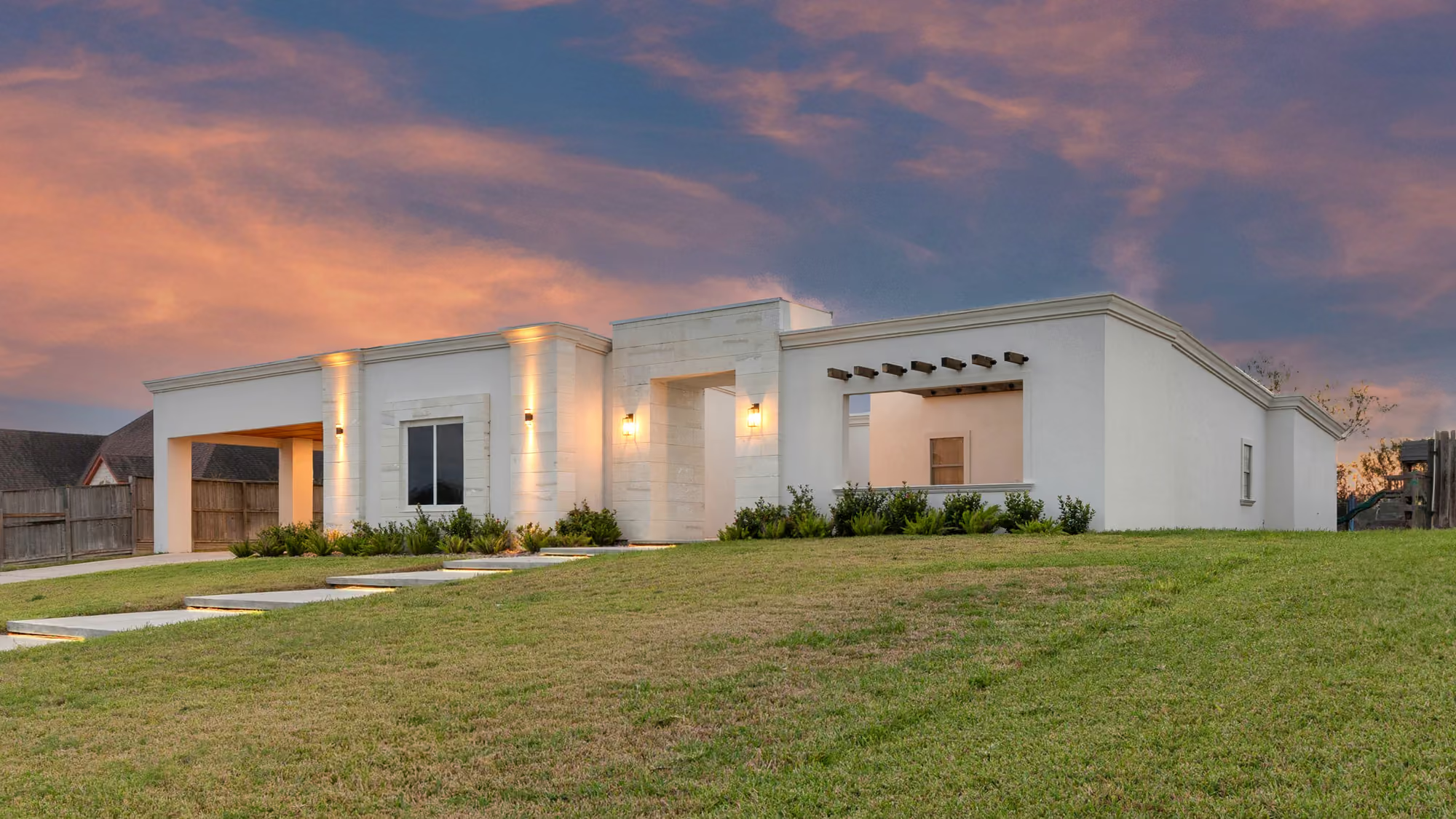
Every home we build includes siding, board and batten or EIFS stucco, with cedar accents and stone on the front. Brick adds about $2 per square foot of home, and Hebel block or metal walls about $5. In the Valley, the best wall is the one that sheds water, dries when it gets wet and is detailed correctly at the foundation, because no exterior makes a house termite proof on its own.
What does each exterior cost with us?
| Exterior | Added cost | 1,800 sq ft home |
|---|---|---|
| Siding or board and batten | Included | $0 |
| EIFS stucco | Included | $0 |
| Brick exterior wall | +$2 / sq ft | +$3,600 |
| Hebel block | +$5 / sq ft | +$9,000 |
| Metal exterior wall | +$5 / sq ft | +$9,000 |
Costs are approximate and priced in writing before they go into your contract. Every Fully Loaded home also includes 150 square feet of front elevation stone; real cantera beyond that allowance is an added cost. The full list is in the 2026 cost guide.
What is Hebel block?
Hebel is a brand of autoclaved aerated concrete, or AAC: a light, cellular concrete cured under steam and pressure, sold as blocks and panels and covered by the ASTM C1693 standard. Its manufacturer has a plant in Pesquería, Nuevo León, a few hours from the Valley, which helps explain why families here know the name.
What the manufacturer’s Mexican catalog reports:
- Weight. About 25 to 37 pounds per cubic foot, far lighter than standard concrete block.
- Fire. Up to four hours of fire resistance, depending on the assembly.
- Vapor. The material lets water vapor pass, so a wall can dry.
Three cautions are worth knowing:
- Check the R value. The catalog’s conductivity figures work out to roughly R 1.2 to 1.5 per inch, or about R 8.5 for a six inch wall. It also prints a much higher design figure for a specific city. Ask which one you are being quoted.
- Mass is the other half of the pitch. Masonry slows heat moving through a wall during the day, but we have not found independent data for AAC in this climate, so treat energy savings claims with care.
- It needs a finish. AAC is porous and is covered with a render or stucco coat rather than left bare.
Hebel is a good fit for families who want a solid masonry wall and are comfortable with the upgrade cost. It is not required for a comfortable home here: open cell spray foam throughout is already in every contract.
How does brick handle Valley rain?
Brick is a rain screen, not a waterproof wall. Some water passes through it, and the assembly is designed for that. Brick Industry Association guidance calls for at least a one inch air space behind the brick, a water resistive barrier over the sheathing, base flashing and weep holes so the water can drain back out.
Brick asks for little maintenance over the years, and it is the lowest cost upgrade on the list. It also mixes well: a brick base under lighter siding is a classic farmhouse combination, as on our modern farmhouse custom home.
EIFS or stucco: what is the difference?
Traditional stucco is a cement plaster applied over lath. EIFS, an exterior insulation and finish system, layers a finish coat over foam insulation board, which allows crisp lines and adds insulation outside the framing.
EIFS has a past: early barrier systems trapped water at bad details. Today the industry’s own association says EIFS with drainage is required over framed walls, and residential code calls for a tested drainage path. What to check is simple: drainage behind the finish, and proper flashing at windows, roof edges and penetrations. Sealant alone is not a plan. You can see a clean stucco line on our contemporary custom home.
Board and batten: what should I ask?
Vertical board and batten is the signature of today’s farmhouse style, and it is included in your exterior options. Ask which product is being used and what it needs. Painted siding needs repainting over the years, and that is the real cost of the look. If the product is fiber cement, makers offer lines formulated for humid and coastal climates; James Hardie, for example, sells by climate zone, so confirm the right one for your ZIP code. Keep siding well above grade, for the termite reason below.
When do metal walls make sense?
On a barndominium, a shop or a modern design with a working edge. Metal sheds water and asks for little beyond washing, and salt air warranty limits like the ones in our metal roof guide can apply near the coast. In Cameron County, salt air is hard on fasteners and hardware, so the exterior specification changes there.
Does the exterior stop termites?
No, and this matters here. Texas A&M has documented Formosan termites in 31 Texas counties, including Hidalgo and Cameron. Hebel and brick give termites nothing to eat in the wall itself, but the roof framing, trim and interior are still wood. AgriLife’s guidance applies to every exterior:
- Treat the soil before the slab is poured. Termite pretreatment is standard in how we build.
- Keep at least six inches of exposed foundation below the siding, especially with stucco.
- Never let siding or insulation touch the soil.
- Read your treatment contract: some in Texas exclude Formosan termites.
The last point is one to remember after move in, too. Do not bury that six inches under a flower bed or new landscaping.
How do I choose?
| If this matters most | Lean toward |
|---|---|
| Staying within the base price | Siding, board and batten or EIFS stucco |
| Low maintenance at a small upgrade | Brick |
| A solid masonry wall | Hebel block |
| Clean, modern lines | EIFS stucco |
| Farmhouse character | Board and batten with a brick or stone base |
| A shop or barndominium look | Metal |
Your selections go through our design team, priced against your allowances before anything is ordered. See home selections and finishes.
Frequently asked questions
Can I mix materials?
Yes, and many plans do. The upgrade rates above are for the material on the exterior wall, so a mix is priced from your elevations once the plan is drawn.
Is Hebel worth the upgrade?
It depends on what you value. You are paying for a masonry wall and how it feels and lasts, about $9,000 on an 1,800 square foot home. If your priority is the electric bill alone, the included spray foam, windows and shade do most of that work.
Which exterior is best near the coast?
The one specified for salt air and detailed to meet windstorm requirements. See our guide to windstorm certification in Cameron County.
Where can I see examples?
Look through homes we have built, then schedule a consultation and bring photos of the looks you like.