Yes, you can build on land you already own almost anywhere in the Rio Grande Valley. Before you design, verify six things: the soil, drainage and flood status, how utilities or their rural alternatives will reach the homesite, who regulates the land, the setbacks and easements, and a current survey. Land you own free and clear can often count toward your construction loan down payment.
Many families in Hidalgo, Cameron and Starr counties already own land, often inherited from parents or grandparents, and are not sure how to turn it into a finished home. This guide walks through it, from the first site visit to move in day.
Can you build on your own land in South Texas?
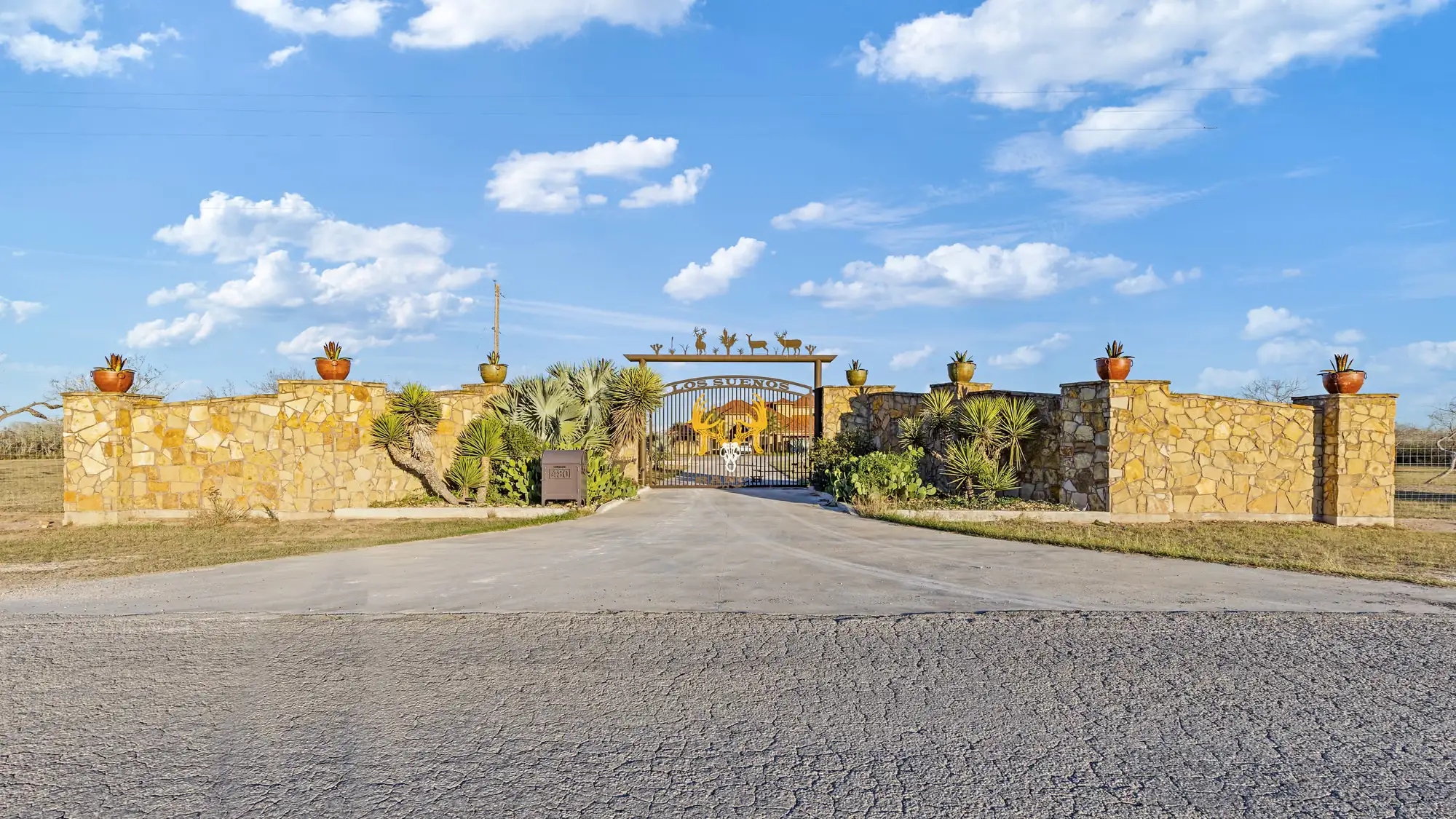
Yes, and it is common here. A Build On Your Lot program is designed for exactly this: instead of buying a lot in a subdivision, you bring the builder your property, maybe outside La Joya, near Rio Grande City or in the county between San Juan and Alamo, and the builder handles planning, permitting, utilities and construction on that specific piece of land. It works for:
- Families who inherited ranch or farm land and want to carve out a homesite
- Owners of small lots inside or just outside city limits in McAllen, Pharr, San Juan, Brownsville, Harlingen and other cities
- Buyers who recently purchased land in Starr County or rural Hidalgo and want a custom home instead of a manufactured one
Free site evaluation: we walk your property with you and tell you what is possible before you spend a dollar on plans. See build on your lot.
If you are still shopping for land rather than building on land you own, start with our guide to buying land to build in the Valley.
Step 1: Evaluate the lot’s buildability
Not every piece of land is ready for a house. A professional site evaluation looks at what affects cost, safety and long term durability in South Texas:
- Soil type and bearing capacity. Clay, sand and caliche are all common in the Valley. Expansive clay swells when wet and shrinks when dry, which is why every home we build sits on a post tension slab engineered to the soil report for that lot.
- Drainage and grading. Heavy storms test every lot. The evaluation checks how water moves across the land and whether regrading, swales or culverts are needed to keep water away from the slab.
- Flood status. Parts of Hidalgo, Cameron and Starr counties sit in FEMA flood zones. A high risk zone brings a floodplain development permit, an elevation certificate and a minimum floor height; in unincorporated Hidalgo County, the finished floor has to sit at least 18 inches above the centerline of the street the lot faces or above natural ground, whichever is higher. Our guide to building on a lot in a flood zone covers it in detail.
- Utilities. Is there a water line, sewer or power pole nearby, or will you need a well, a septic system and a new electrical service? Step 3 covers each one.
- Setbacks and easements. The county’s subdivision rules, the city’s zoning or your deed restrictions set how far the house must sit from property lines and roads, and drainage or utility easements can limit where it goes.
Step 2: Verify who regulates your land
Who reviews your plans depends on where the parcel sits:
| Where the land is | Who regulates it | What to expect |
|---|---|---|
| Inside city limits | The city | Zoning, the city’s adopted building codes, permits and inspections. McAllen moved to the 2024 international codes in January 2026, as reported; Edinburg enforces the 2018 codes. |
| In a city’s extraterritorial jurisdiction | Often both | The city’s subdivision rules can apply outside its limits. |
| Unincorporated county land | The county | No traditional zoning, but subdivision, floodplain and septic rules apply. |
On unincorporated land, the county’s requirements are specific. Cameron County’s residential permit checklist, for example, asks for energy code compliance documentation, a septic permit where there is no sewer, an elevation certificate where it applies, and windstorm information from a state certified engineer. Counties within 50 miles of the border can also require new homes outside city limits to follow the International Residential Code, with inspections by qualified third party inspectors at the foundation, before drywall and at completion, if the county has adopted that rule (Local Government Code chapter 233).
We pull the permits for you, all of them except windstorm where it applies: site plans, applications, fees and inspection scheduling, with the county or the city, so you do not have to navigate several offices on your own.
Step 3: Determine utility connections
Utilities are the biggest difference between building in town and building on family land out in the county.
- Water. In cities and close in subdivisions, you connect to city water or a water supply corporation. In rural Starr County or western Hidalgo, you may need a well. Ask the provider for a letter confirming it will serve your parcel.
- Sewer or septic. Where city sewer is unavailable, you need a permitted septic system. Texas rules require at least half an acre with public water, or one acre with a private well, plus a site evaluation and a permit before construction. The house, driveway and septic field all have to fit on the lot, which is another reason to plan them together.
- Electricity. Rural homesites may need a new service, extra poles or an easement to bring power from the nearest line. We coordinate with the utility serving your area, such as AEP Texas or Magic Valley Electric Cooperative.
- Gas or propane. Many city neighborhoods have natural gas; rural homes usually rely on propane. The choice affects appliances, yard layout and operating costs.
One more check on land that was divided informally: in border counties, utilities generally cannot connect water or sewer to a lot that was subdivided without an approved plat. Our land buying guide explains the rule and its exceptions.
Key takeaway: on rural land, the well and septic design matter as much as the house plan. Plan them early.
Step 4: Design your home for the lot
With the land and utilities understood, the house can be designed for your property instead of forcing a subdivision plan onto a unique lot:
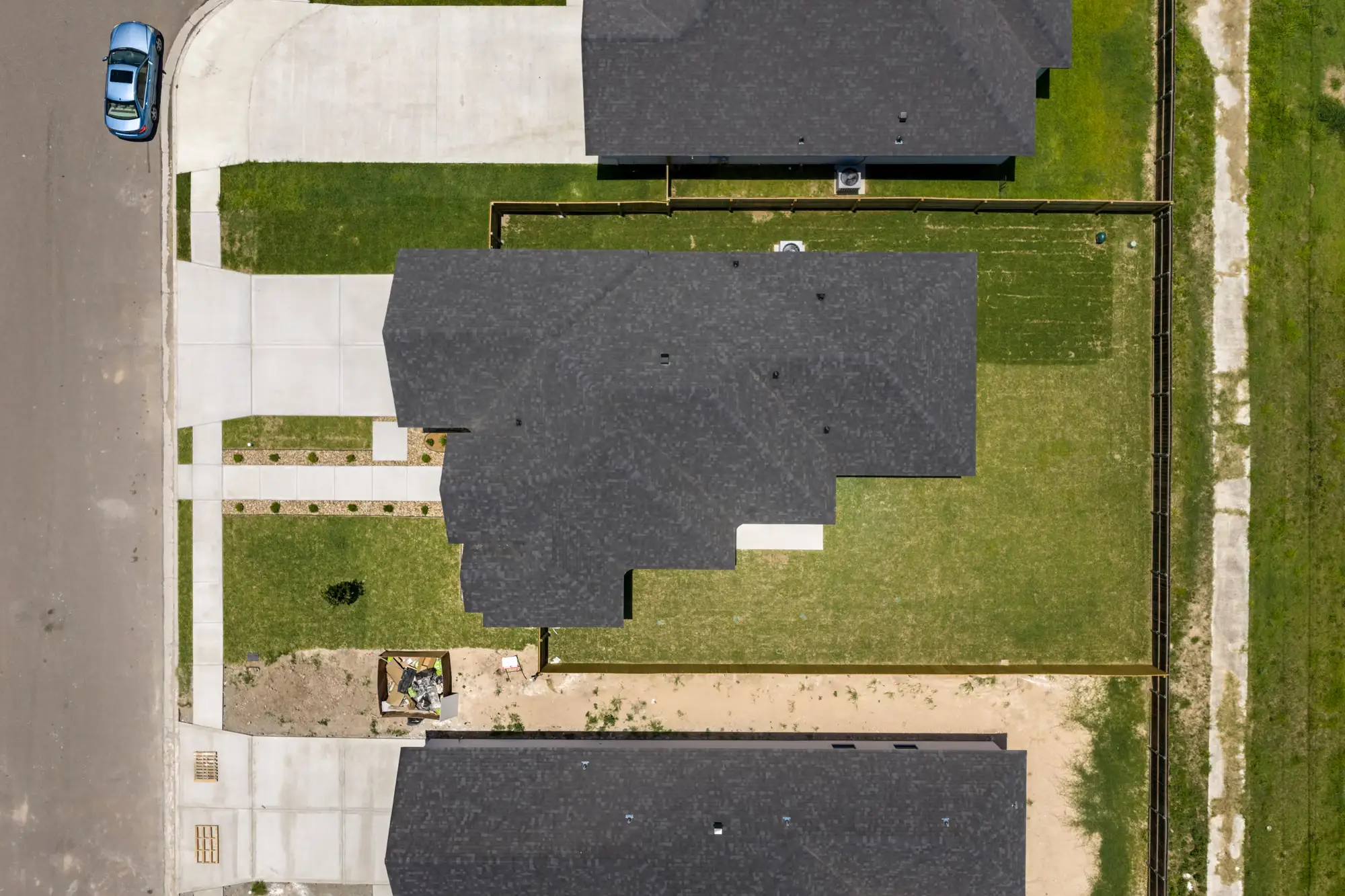
- Lot shape and dimensions. Long, narrow tracts along county roads call for a front to back layout; wider parcels allow a courtyard or a side entry garage. Corner lots in cities have larger street setbacks and visibility triangles.
- Orientation and sun. In Valley heat, limit large west facing windows and put covered porches where the afternoon sun lands. Living areas can catch the breeze while bedrooms stay away from road noise and late sun.
- Driveways and entries. Setbacks, existing gates and caliche drives shape where the garage and front door go. In flood prone areas the house may sit well above the road, which changes the driveway slope and the entry steps.
Many clients start from one of our plans and customize it, flipping it, stretching rooms or adding porches, and many start from scratch. Either way, blueprints are free with the purchase of your home. See custom home design.
Step 5: Finance a build on your lot project
Financing a home on your own land is different from buying a finished home, and the biggest advantage many Valley families have is land equity.
- Land as down payment. If you own your land free and clear, a lender can often count its appraised value toward the required down payment. If your land is worth $60,000 and the total project is $300,000, that equity may cover the down payment or most of it, depending on the program.
- Construction to permanent loans. Most build on your lot projects use one loan that funds construction in draws and converts to a 30 year mortgage when the home is complete. During construction you typically pay interest only on what has been drawn.
- FHA, VA, USDA and conventional options. USDA is popular in eligible rural areas of Hidalgo, Cameron and Starr counties, VA serves eligible veterans and service members, FHA helps buyers with more flexible credit, and conventional loans cover many borrowers the others do not. Our loan comparison and USDA guide explain what changed in 2025 and 2026.
- Agricultural valuation. If the land carries an agricultural valuation, the part you convert to a homesite can owe a rollback tax. Our guide to property taxes on a new home explains how it is calculated.
We do not lend, but we introduce you to Valley lenders who close construction loans regularly. See financing guidance.
Common challenges, and how we solve them
- Unstable or variable soil. Where caliche or clay varies across the lot, the engineer may call for deeper beams or a heavier slab design. It costs more up front and protects the house for decades.
- Flood prone property. We work with surveyors to set the finished floor elevation, design the pad and secure the floodplain permits, which can also lower long term flood insurance costs.
- Rural utilities. Well drilling, septic design, power poles and driveway access can overwhelm anyone doing them alone. We schedule them with trades we trust so utilities are ready when the house needs them.
A real world example: on a ranch outside Rio Grande City, a family’s homesite needed an engineered slab and a longer power run than expected. Because it came up during the free site evaluation, the budget and layout were adjusted before the owners applied for financing, not after.
How much does it cost to build on your own land in the Valley?
Three pieces make up the total: the house, the site preparation and the utilities.
The house. Our 2026 construction rates for the Fully Loaded standard are $115 to $120 per square foot in Hidalgo and Starr County, $120 to $130 in Cameron County, and $130 to $145 in Alice and the Coastal Bend. For an 1,800 square foot home, that is a construction budget of $207,000 to $261,000 depending on the region, with upgrades such as a metal roof priced per square foot on top. The 2026 cost guide has the full breakdown.
Site preparation and utilities. These come on top of the house and vary by lot:
- Clearing brush, grading and building a driveway
- Fill beyond the ten dirt hauls included in every contract
- A well and septic where needed, or tap fees for city water and sewer
- Power service, poles and possibly a propane tank
In a platted subdivision these items can be modest; on a raw tract far from existing utilities they can run to tens of thousands of dollars. That is why we price them after the site evaluation, and why a 10 to 20% contingency belongs in your plan.
Why owning the land helps. You are not paying today’s lot prices on top of construction, and your land equity often covers the down payment. Many families find that building on their own land gets them a better home than a lot and house package in a subdivision.
Frequently asked questions
Can I build on my land if it is outside city limits in Hidalgo, Cameron or Starr County?
In most cases, yes. Unincorporated areas generally allow residential use, but county subdivision, floodplain and septic rules still apply, and the land has to have been legally divided. We help you secure the county permits your parcel needs.
What if my land does not have utilities yet?
That is common on inherited or agricultural land. We coordinate a well or a water line extension, the septic design and permit, and the new electrical service, and those costs are built into your overall budget and loan.
How long does it take to build on my own lot?
Plan on two to four months for prequalification, design, selections and permitting, then about six months of construction from loan closing to keys. Rural utility work can add a few weeks. The construction timeline guide shows each phase.
Do I need to hire my own architect or engineer?
Not usually. Our in house drafting team draws the plans, and when your lot needs an engineered foundation or septic design, we bring in licensed engineers as part of the process, so you are not managing separate contracts.
How do I get started if I am not sure my land is buildable?
With a free site evaluation. We visit your property anywhere in Hidalgo, Cameron or Starr County, review access, drainage, flood status and utilities, and give you a realistic picture of what it takes to build there. From there we can introduce you to lenders, share floor plans and outline the path from raw land to keys.
Ready to build on your land in the Valley?
Whether your property is a one acre lot on the edge of San Juan, a family tract in rural Starr County or a piece of land in Cameron County outside Brownsville or Harlingen, building on it is possible with the right guidance. Explore build on your lot, see where we build, and schedule your free site evaluation to see exactly what your land will support.