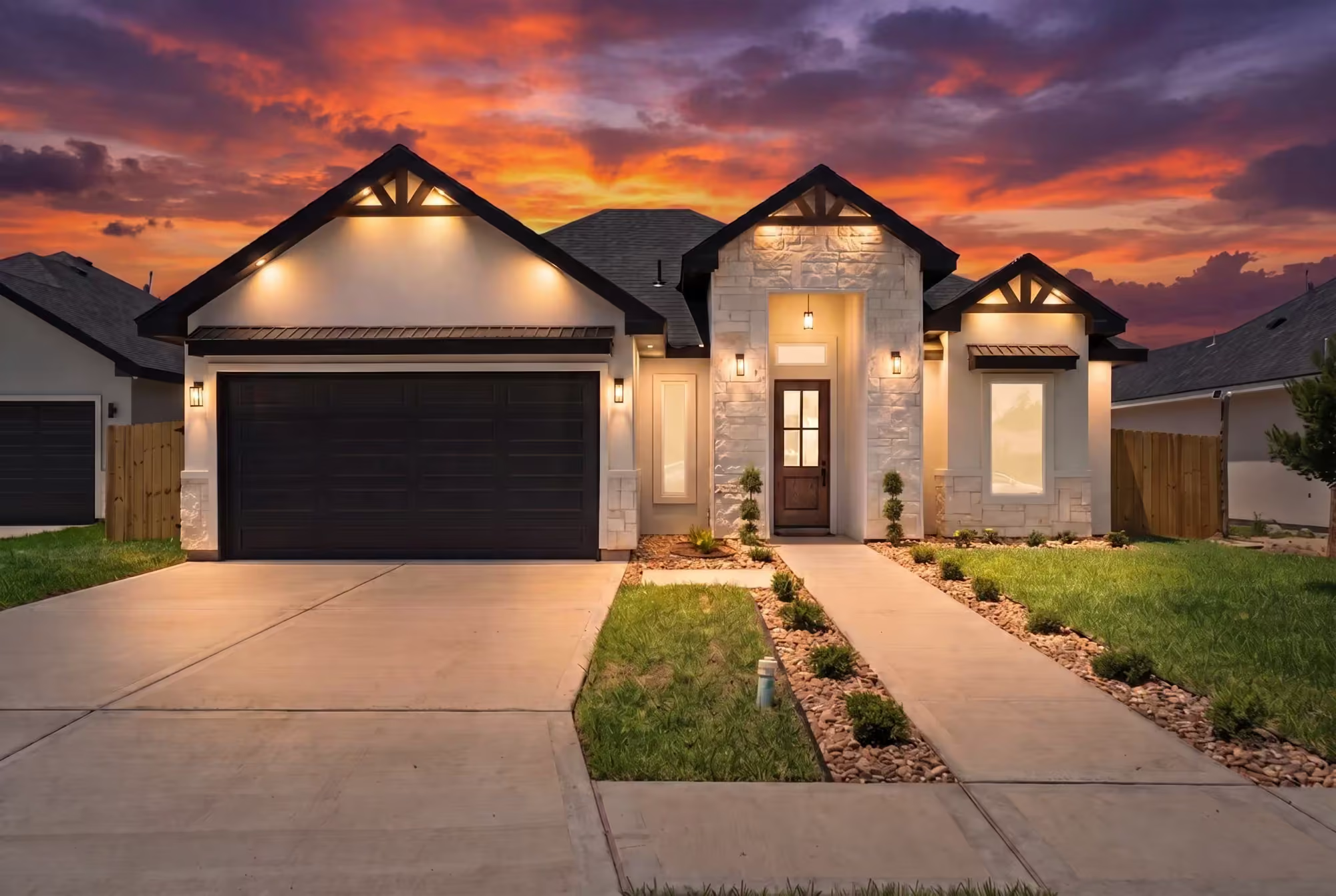
Property taxes on a new home in Texas are set by your county appraisal district’s January 1 value, multiplied by the combined rates of your county, city, school district and special districts. A house still under construction on January 1 is taxed on what stood that day, and on its full value the following year. File your homestead exemption as soon as you move in: since 2025 it removes $140,000 from your school district value.
This is general information, not tax advice. Exemptions, deadlines and values are set by state law and applied by your appraisal district, so confirm your own situation with them.
How is a new home taxed in its first years?
Texas appraises all taxable property at its market value as of January 1 (Tax Code section 23.01). For a house built during the year, that single date decides almost everything. In practice, appraisal districts value a home that is partly built on January 1 by how complete it was that day.
Say you close your construction loan in March and move in by October:
| Tax year | What is on the roll | Homestead exemption | 10% cap on appraised value |
|---|---|---|---|
| Year of the build | Land, plus whatever stood on January 1 | Usually not yet | No |
| First January after completion | Full market value of land and house | Yes, once you have applied | No, the new house enters at full value |
| The year after that, onward | Market value, limited by the cap | Yes | Yes, appraised value can rise at most 10% a year |
The jump between the first two rows is the one that surprises people. The cap does not smooth it, because the finished house counts as a new improvement and enters the roll at full market value (Tax Code section 23.23). Exact timing depends on when you qualify, so confirm it with your appraisal district.
What does the homestead exemption save in 2026?
On November 4, 2025, Texas voters approved two constitutional amendments that raised the school district homestead exemptions, applying from the 2025 tax year:
- Every homestead: the school district exemption rose from $100,000 to $140,000.
- Owners 65 or older, or disabled: the additional exemption rose from $10,000 to $60,000, for $200,000 in total.
The Texas Comptroller’s exemptions page explains both. These amounts apply to school district taxes, usually the largest line on a Valley tax bill. Some cities, counties and other taxing units offer optional homestead exemptions of their own; your appraisal notice lists what applies to your address. Owners 65 or older also get a ceiling on school taxes for that home.
To see what the exemption is worth, multiply it by your school district’s rate. At a hypothetical school rate of $1.00 per $100 of value, the $140,000 exemption removes $1,400 a year from the bill; for an owner over 65, the $200,000 total removes $2,000. Use your district’s adopted rate for your real number.
When should I apply, and how?
As soon as the home is your principal residence. The rules that matter:
- You may not have to wait for January. Since 2022, someone who acquires a home after January 1 can receive the exemption for the rest of that year right away, provided the previous owner did not claim it that year (Tax Code section 11.42). If you built on land you already owned, ask your appraisal district how it treats that first year. Either way, file the day you move in.
- Deadlines. If you owned and lived in the home on January 1, file before May 1. If you acquired it later in the year, file before the first anniversary of the date you acquired it. Late applications can be accepted up to two years after the delinquency date (Tax Code sections 11.43 and 11.431).
- Match your ID. The address on your Texas driver’s license or state ID has to match the home.
- Where to file. The Hidalgo County Appraisal District takes homestead applications through its online portal, and the Cameron Appraisal District walks you through its residential homestead application online. In Starr and Jim Wells County, file with the county appraisal district.
The exemption is not automatic. No application, no exemption.
How does the 10% cap work on a new home?
Once your home has qualified as a homestead, its appraised value for tax purposes can rise no more than 10% a year, plus the value of any new improvements. The cap takes effect on January 1 of the tax year after the first year you qualify.
An example with round numbers: the finished home is appraised at $300,000 in its first full year. The next year the market says $345,000, a 15% jump. With the cap in effect, your taxable appraised value can be at most $330,000. Add a pool or a room and the addition enters at full value on top.
How do I avoid an escrow surprise?
Most mortgages collect property taxes monthly through escrow. On new construction, the first estimate is often based on a bill that only covered the land or a half built house. When the full value arrives, the escrow account comes up short and the monthly payment rises, sometimes along with a one time shortage payment.
Ask your lender how they are estimating taxes. The safer number is the finished value of the home times the combined rate, minus your exemptions. If the escrow starts lower than that, set aside the difference each month so the second year’s adjustment is not a shock.
What if my land has an agricultural valuation?
Inherited family land in the Valley often carries an agricultural or open space valuation, which taxes it on what it produces rather than on market value. Building your homesite changes the use of that portion of the land, and the change triggers a rollback tax: the difference between the taxes paid and the taxes that would have been due at market value for the three years before the change, plus 5% interest a year (Tax Code section 23.55).
It applies to the part you take out of agricultural use, not automatically to the whole tract, and the rest can keep its valuation if it still qualifies. Ask the appraisal district before construction starts so the number is in your budget, not in your mailbox. Our guide to building on your own land covers the rest of the land questions.
How do I estimate the bill before I build?
For each taxing unit on your address, take the appraised value, subtract the exemptions that unit honors, and multiply by its rate per $100. Add the results. Your appraisal district’s website shows which units tax your address and their adopted rates.
Values move, too. In Cameron County, median property values more than doubled between 2019 and 2025 as the Brownsville area grew, the Texas Tribune reported in August 2026. Estimate taxes from today’s values, not from what a neighbor paid five years ago.
Frequently asked questions
Do I pay property taxes while my home is being built?
If you own the land, yes: the bill covers the land and whatever improvement stood on January 1 of that year. The builder does not pay your property taxes.
Is the homestead exemption automatic?
No. You apply once with your appraisal district, and it stays in place while the home remains your principal residence.
Can I protest the value on a new home?
Yes. Appraisal notices usually arrive in the spring, and the protest deadline is May 15 or 30 days after the notice is delivered, whichever is later. A comparison with similar new homes nearby is the strongest evidence you can bring.
Does the $140,000 exemption apply to city and county taxes?
No. The $140,000 and the additional $60,000 apply to school district taxes. Cities, counties and other units decide their own optional exemptions.
Planning a build and want the whole budget in one place? Our 2026 cost guide lists what the contract covers and what it does not, and you can schedule a consultation to walk through your numbers with us.