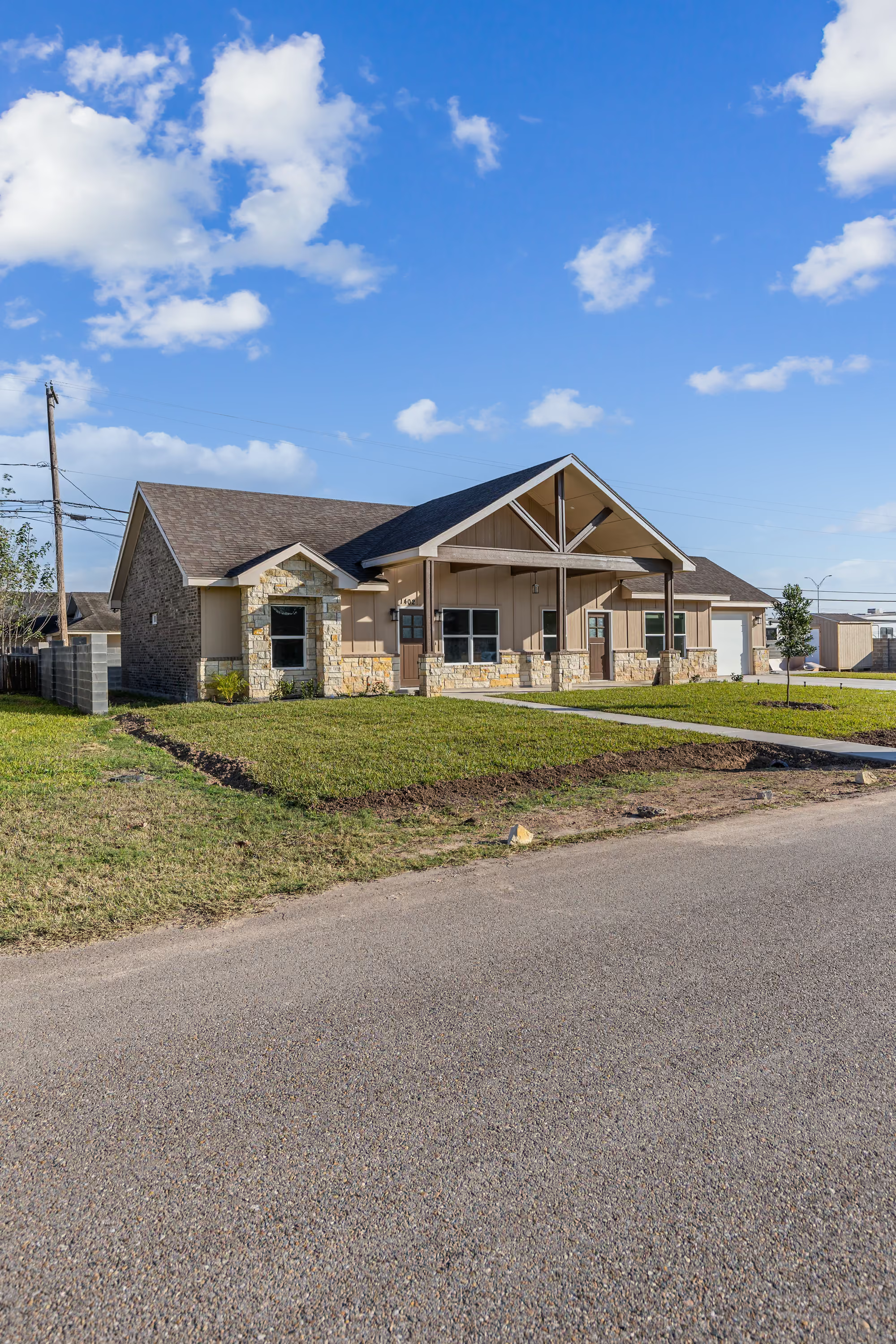
USDA’s guaranteed home loan lets eligible families build with zero down on a lot inside a USDA eligible rural area, which covers much of Starr County and rural parts of Hidalgo and Cameron counties. For 2026, household income in Hidalgo County must stay at or under $122,800 for one to four people, or $162,100 for five to eight. Borrowers must be U.S. citizens, non citizen nationals or qualified aliens, and the home must be their primary residence.
We are a builder, not a lender, and this is general information. USDA sets the rules, lenders apply them, and both change; only a lender can tell you whether you qualify.
Is my lot in an eligible area?
Look up the exact address or parcel on the USDA property eligibility map. The boundaries do not follow city limits, so do not assume either way. In general:
| Area | What we usually see |
|---|---|
| Rio Grande City, Roma and rural Starr County | Much of it is eligible |
| Rural Hidalgo County, including the eastern edge near Mercedes | Many parcels are eligible |
| Rural Cameron County | Many parcels are eligible |
| McAllen, Edinburg, Brownsville, Harlingen and similar cities | Mostly not eligible |
The map decides, parcel by parcel. Check it before you buy land if you are counting on USDA.
Does my household income qualify?
USDA’s limits for the guaranteed program were updated effective July 13, 2026. Hidalgo County uses the program’s standard limit:
| Household size | 2026 income limit, Hidalgo County |
|---|---|
| 1 to 4 people | $122,800 |
| 5 to 8 people | $162,100 |
Confirm the figure for Cameron, Starr or Jim Wells County on USDA’s eligibility site before you plan around it. Two details trip people up. USDA looks at the income of every adult in the household, not only the people on the loan. And it allows some deductions, for example for dependents and child care, so a household slightly over the line on paper may still fit. Your lender runs the real calculation.
Separately from the limit, you have to show you can repay the loan. Lenders typically look for a credit score of 640 for automated approval, though lower scores can sometimes be underwritten manually.
Who can borrow in 2026?
USDA’s regulation requires borrowers to be U.S. citizens, U.S. non citizen nationals or qualified aliens. On March 18, 2025, USDA ended a temporary authority that had allowed some other non citizens to qualify (USDA bulletin). FHA made a similar change in May 2025. If your household includes a non permanent resident borrower, conventional financing may be the path; our loan comparison explains the differences.
The home must be your primary residence, and it must meet the program’s property standards.
How does the single close construction loan work?
USDA allows a single close construction to permanent loan under 7 CFR 3555.105. The main rules:
- One closing, before construction starts. The loan funds the build in draws and then becomes your permanent mortgage.
- The rate is locked before closing. You know your permanent rate from day one.
- Interest during construction is paid monthly or covered by an interest reserve built into the loan.
- Payments can wait. Regular principal and interest payments can be postponed up to a year, or covered by a reserve of up to twelve months of principal, interest, taxes and insurance.
- The lender needs at least two years of construction lending experience.
- The builder needs at least two years of experience building homes, any license the state requires, and at least $500,000 of general liability insurance. Owner builders cannot use it.
Not every lender offers USDA single close. We introduce you to Valley lenders who do.
What about the energy code rule?
In 2024, HUD and USDA adopted a rule requiring new homes financed with FHA or USDA loans to meet the 2021 international energy code. A federal court in Texas vacated it in March 2026, and the agencies rescinded it effective May 1, 2026 (Federal Register). It does not change how we build: every home meets or exceeds the current Texas energy code, with open cell spray foam insulation throughout. More in our guide to energy efficient homes in 2026.
What will I pay?
- No down payment. You still pay closing costs, and lenders may ask for reserves.
- Guarantee fees. An upfront fee, usually financed into the loan, and an annual fee paid monthly. Your lender quotes both.
- No set maximum loan amount. The limit is your income and your ability to repay, not a published loan cap.
- The build itself. Our Hidalgo and Starr County rate is $115 to $120 per square foot for construction; rural lots often add septic, a well or a longer power run, which we price after a free site evaluation. See the 2026 cost guide.
Frequently asked questions
Can I use USDA to build on land I already own?
Often, yes. The lender appraises the finished home, land included, and your land can reduce what you need to borrow. Ask how your lot will be credited, especially if it still carries a loan or came to you through an inheritance.
Is USDA only for first time buyers?
No. The guaranteed program is not limited to first time buyers, but it is for your primary residence, and you must meet the income and area rules.
How long does USDA approval take?
Longer than a conventional loan, because USDA reviews the file after the lender does. Getting prequalified early and having your plans and selections final before you apply keeps it moving.
Do you build in USDA eligible areas?
Yes. We build across Starr County, including Rio Grande City, where much of the surrounding area is USDA eligible, and on rural parcels in Hidalgo County and Cameron County.
Want to know if your lot and household fit? Get prequalified with a lender we work with, usually in one to three business days, or schedule a consultation and bring your parcel address.