
How long does it take to build a custom home in McAllen or Edinburg, TX in 2026?
Custom homes, McAllen, Edinburg, 2026 construction timelines
For most families building with South Texas Builders, a custom home in McAllen, Edinburg, or the Rio Grande Valley takes about 6 months from loan closing to key delivery.
That timeline can vary based on city permits, weather, material availability, site conditions, and how quickly final design decisions are made. But for a well‑planned custom home, South Texas Builders usually follows a clear, phase‑by‑phase process that helps families understand what happens before, during, and after construction.
If you’re thinking about building a custom home in 2026, this guide will show you the real timeline, what can delay the process, and how to prepare before construction starts.
The short answer: about 6 months from loan closing to key handoff
A custom home with South Texas Builders typically takes about 6 months after loan closing.
Here’s the general construction schedule:
Design and plans: 2 weeks
Permit approval: 2 weeks, depending on the city
Site prep and foundation: 2–4 weeks
Framing and roof: 4 weeks
MEP (mechanical, electrical, and plumbing) rough‑ins: 4 weeks
Insulation, drywall, and taping: 3 weeks
Interior finishes, trim, and flooring: 6 weeks
Final inspections and punch list: 2 weeks
Total estimated time: approximately 25–27 weeks, or close to 6 months.
This is the typical schedule after the financing portion is complete and the project is ready to move forward. Before that, families may still be working through financing, land details, floor plans, design decisions, or construction loan requirements.
If you’re still comparing building versus buying, it may also help to read: Build vs. Buy in the Rio Grande Valley: An Honest Comparison for 2026.
Why the timeline starts after loan closing
One of the most common misunderstandings in custom home construction is when the “clock” really starts.
For many families, the process begins emotionally when they start talking about building. Maybe they’re already looking at lots, saving floor plan ideas, touring model homes, or asking questions about square footage and pricing.
But from a construction standpoint, the most realistic timeline begins once the loan is closed and the project is ready to move forward.
That’s why South Texas Builders usually explains the schedule as:
6 months from loan closing to key handoff.
Before loan closing, there can be important steps such as:
Choosing or confirming the lot
Reviewing budget and square footage
Getting pre‑approval or qualification for the loan
Finalizing the home design
Preparing construction plans (blueprints)
Confirming engineering requirements and permits
Aligning the construction loan process
If you already own land, you may be closer to building than you think. South Texas Builders also has a dedicated Build On Your Lot in the RGV program for families who already have property and want to turn it into a finished custom home.
Phase 1: Design and plans — about 2 weeks
The first major phase is design and drafting. For many families, this is one of the most exciting parts of the process because the home starts to become real on paper. This is where your needs, lifestyle, budget, and vision turn into a buildable plan.
With South Texas Builders, blueprints are included at no cost with the purchase of a new home. That’s important because many families begin the process worried about how much it will cost just to design the home before construction even starts.
During this phase, the team can talk about:
Desired square footage
Number of bedrooms and bathrooms
Kitchen layout
Garage size
Open‑concept living areas
Outdoor living or covered patio space
Specific family needs
Budget goals
Lot orientation and site conditions
The goal isn’t just to create a beautiful home. The goal is to design a home that can actually be built correctly, efficiently, and within the family’s financial plan.
For more on the design process, visit Custom Home Design Services in the RGV
Phase 2: Permit approval — about 2 weeks
After plans and required documents are ready, the project moves into the permitting phase. In McAllen, Edinburg, and other Rio Grande Valley cities, permit timelines can vary. Some approvals move quickly and others take longer depending on the city’s workload, plan review, site details, zoning, or requested corrections.
South Texas Builders typically estimates about 2 weeks for permit approval, but this is one of the phases where timing can vary by city. McAllen, for example, uses an online portal (Accela Citizen Access) for managing permits and inspections, while Edinburg has operated through the EnerGov system since 2026, which helps streamline tracking and scheduling inspections
For example, McAllen and Edinburg both have building safety and permitting departments with their own review processes. The City of McAllen offers permitting and inspection services, including an online portal, while Edinburg’s Building Safety Department handles plan review, permit issuance, and inspections for new construction.
That’s why it’s important to work with a builder who understands the local process. A builder familiar with the RGV can reduce confusion, prepare the correct documents, and guide the project through city review.
If you’re building specifically in McAllen, visit Custom Home Builders in McAllen, TX.
If you’re building in Edinburg, visit Custom Home Builders in Edinburg, TX.
Phase 3: Site prep and foundation — about 2–4 weeks
Once permits are approved, physical work begins.
The site prep and foundation phase usually takes 2 to 4 weeks. This can vary based on the condition of the lot, grading needs, soil conditions, utility access, weather, and the overall size of the home.
This phase can include:
Clearing or prepping the lot
Site layout (staking the home)
Excavation or grading
Utility coordination (water, drainage, etc.)
Setting forms for the slab or foundation
Installing steel reinforcement
Pouring and curing concrete
In the Rio Grande Valley, the foundation is one of the most important parts of the build. A beautiful home depends on proper prep, careful site evaluation, and quality construction from the ground up.
This is also one of the reasons families shouldn’t just ask, “How fast can you build?” They should also ask, “How carefully do you build?”
Speed matters. But quality matters more.
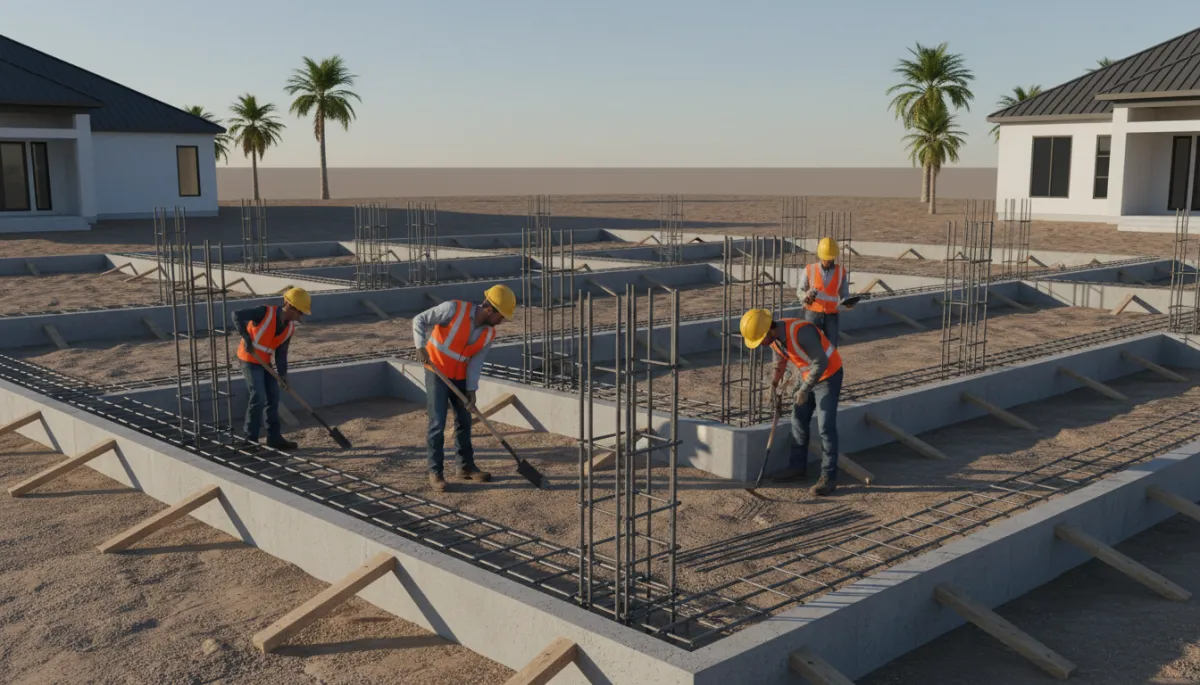
A well‑executed foundation protects your family’s investment for decades.
Phase 4: Framing and roof — about 4 weeks
After the foundation is complete, the framing phase begins. This is when the house starts to look like a real home. Walls go up, rooms are defined, roof lines are set, and families can finally walk through the layout in a more tangible way.
Framing and roofing usually take about 4 weeks. During this stage, the builder works on:
Exterior and interior framing
Load‑bearing walls and interior partitions
Roof structure
Sheathing
Structural details
Openings for windows and doors
This is often one of the most exciting phases for homeowners because the project starts to feel real. The floor plan is no longer just a drawing; you can now see the kitchen, bedrooms, living room, garage, and main spaces taking shape.
However, this is still an early stage. Many critical systems still need to be installed before the home starts to feel finished.
Phase 5: MEP rough‑ins — about 4 weeks
MEP stands for mechanical, electrical, and plumbing. This phase typically takes about 4 weeks and includes the main systems that make the home function.
MEP rough‑ins can include:
Plumbing lines
Electrical wiring
Air conditioning ductwork (HVAC)
Vents and exhaust fans
Mechanical systems and utility connections
Initial city inspections
This part of the build may not look as impressive as framing or finishes, but it’s one of the most important phases of the entire project. A well‑built custom home isn’t just about what you can see; it’s also about what’s behind the walls.
This stage affects comfort, safety, efficiency, and long‑term performance. That’s why coordination is key: plumbing, electrical, and HVAC trades must work in the right order and follow the approved plans carefully.
Phase 6: Insulation, drywall, and taping — about 3 weeks
Once MEP rough‑ins are complete and inspected, the home moves into the insulation, drywall, and taping phase. This stage usually takes about 3 weeks.
At this point, the home changes dramatically. The open framing starts to become real rooms. Walls are closed in, ceilings are formed, and the interior begins to feel much closer to a finished home.
This phase typically includes:
Installing thermal and acoustic insulation
Hanging drywall
Taping and finishing joints
Preparing wall and ceiling textures
For many families, this is the moment when the home starts to feel more personal. Spaces become quieter, more defined, and easier to imagine as everyday living areas.
Phase 7: Interior finishes, trim, and flooring — about 6 weeks
The interior finishes phase typically takes about 6 weeks. It’s one of the longest stages because there are many details, trades, products, and selections that must be coordinated.
This stage can include:
Installing kitchen and bathroom cabinets
Interior doors and frames
Trim, baseboards, and decorative carpentry
Flooring installation (porcelain tile, vinyl, wood, etc.)
Tile and wall finishes in bathrooms and kitchen
Countertops (granite, quartz, etc.)
Interior painting
Installing light fixtures and electrical devices
Bathroom finishes (showers, sinks, mirrors)
Kitchen finishes (sink, faucets, final details)
This is where the personality of the home really starts to show. The selections you made at the beginning now become visible. The kitchen starts to look like a kitchen; bathrooms become functional and finished; flooring completely changes the feel of the home. Trim, paint, lighting, and fixtures bring the design together.
This phase is also one of the reasons why planning matters so much. Delayed selections, back‑ordered materials, or last‑minute changes can extend the schedule. For families who want construction to move as smoothly as possible, it helps a lot to make design decisions early and avoid changing major choices once the build is underway.
Phase 8: Final inspections and punch list — about 2 weeks
The final phase usually takes about 2 weeks. This is when the home is inspected, checked, touched up, cleaned, and prepared for key handoff.
This stage can include:
Final city inspections
Builder quality walkthroughs
Final adjustments and small fixes
Paint touch‑ups and sealing or caulking clean‑up
Adjusting doors, locks, and cabinets
Checking fixtures and system performance
Final deep cleaning
Creating and completing the punch list
A punch list is a list of small items that need to be corrected or completed before the home is fully ready. This doesn’t mean anything is seriously wrong; it’s a normal part of properly finishing a new home. The goal is for the home to be ready for the family to move in with confidence.
What can delay a custom home timeline?
Even with a clear plan, there are factors that can extend the construction time. The most common delays include:
Weather
Heavy rain, storms, extreme heat, or muddy site conditions can delay work, especially during site prep, foundation, framing, and exterior phases. In Texas, weather is notoriously unpredictable, so responsible builders usually build safety margins into the schedule
Permit delays
Permit time can vary by city. McAllen, Edinburg, and other RGV municipalities can have different processes and workloads. A high volume of projects, incomplete documents, or additional plan reviews can extend approval timelines
Material availability
Some products can be delayed based on supplier inventory, demand, special orders, or shipping times. In 2026, the construction boom in McAllen and Edinburg—with hundreds of millions of dollars in new projects—has increased pressure on the local supply chain r
Change orders
Major design changes during construction can affect both time and cost. This is especially true for changes to layout, electrical, cabinets, tile, or fixtures after work has already started. Each change can mean rescheduling trades, reordering materials, or redoing completed work.
Lot or site conditions
Some lots require extra prep, utility coordination, fill, grading, or special solutions before construction can move smoothly. Drainage issues, difficult access, or distant utilities can add days or weeks to the schedule.
Delayed selections
If finishes, colors, fixtures, or materials aren’t chosen on time, certain phases may stall. For example, cabinets can’t be ordered without final measurements and designs, and many suppliers require several weeks of lead time.
Because of all this, South Texas Builders puts a strong emphasis on communication throughout the project. Families need to know what’s happening, what’s coming next, and what decisions they need to make before they turn into delays.
How South Texas Builders keeps families informed
One of the biggest fears families have when building a custom home is not knowing what’s going on. They’re afraid of being left in the dark, not understanding delays, or calling without getting clear answers.
South Texas Builders addresses this by providing regular construction updates directly from Javier González, Director of Construction, and his team, so families know what stage their home is in throughout the process. These updates can include:
Which phase is currently underway
Which inspections or deliveries are scheduled
Which design decisions need to be made soon
Whether external factors (weather, permits, materials) are affecting the schedule
That direct communication matters because building a custom home isn’t just a construction project. It’s a life decision. Families are planning their future, their budget, their move‑in, and the place where they’ll create memories for years to come.
A clear schedule helps, but clear communication is what makes the process feel manageable.
Is a 6‑month timeline fast for a custom home?
For a custom home, 6 months from loan closing to key handoff is a solid and efficient timeline—especially when the home is designed, permitted, built, inspected, and finished properly.
Some production homes (repeated models in large subdivisions) can move faster because plans are already standardized and the builder repeats similar designs. A custom home is different: it requires more planning, more personalization, and more coordination.
The goal isn’t just to finish quickly. The goal is to build a home that fits your family, your lot, your budget, and your long‑term needs.
That’s why the better question isn’t just:
“How long will it take?”
The better question is:
“What does the process look like and how will you keep us informed from start to finish?”
Final answer: how long does it take to build a custom home in McAllen or Edinburg?
In 2026, most custom homes with South Texas Builders take about 6 months from loan closing to key handoff.
The full schedule typically includes:
2 weeks for design and plans
2 weeks for permit approval
2–4 weeks for site prep and foundation
4 weeks for framing and roof
4 weeks for MEP rough‑ins
3 weeks for insulation, drywall, and taping
6 weeks for interior finishes, trim, and flooring
2 weeks for final inspections and punch list
Some homes may take longer depending on weather, permits, materials, city review times, site conditions, or changes during construction. But with a clear plan and consistent communication, the process becomes much more predictable for your family.
If you’re planning to build in McAllen, Edinburg, or anywhere in the Rio Grande Valley, South Texas Builders can help you understand your specific timeline before you start.
Call 956-594-6936 to talk about your home, your land, your financing stage, and your estimated construction time.
Frequently asked questions
How long does it take to build a custom home in McAllen, TX?
A custom home in McAllen typically takes about 6 months from loan closing to key handoff with South Texas Builders. The final timeline can be affected by permits, weather, material availability, and site conditions.
How long does it take to build a custom home in Edinburg, TX?
A custom home in Edinburg usually follows a similar schedule of about 6 months from loan closing to key handoff. However, permit review and city requirements can vary, so the exact timeline depends on the project and location.
Which phase takes the longest when building a custom home?
Interior finishes, trim, and flooring are usually one of the longest phases, at around 6 weeks. This stage includes many details, materials, trades, and final design selections that must be carefully coordinated.
Can a custom home take longer than 6 months?
Yes. Weather, permit delays, material availability, change orders, site conditions, and late selections can extend the schedule. South Texas Builders provides regular updates so families understand where the project stands and why timing adjustments may occur.
When does the construction timeline officially start?
The typical 6‑month timeline starts after loan closing, when the project is ready to move into construction. Design, financing, land purchase, and pre‑construction steps can happen before that point.
Are plans included with South Texas Builders?
Yes. South Texas Builders offers free plans with the purchase of a new home, which helps families start the design process with more clarity and confidence, without an extra cost just for the plan stage.