
FHA, VA, or Conventional: Which Loan Is Best for Building a Home in Texas?
Home Construction Loans, FHA, VA, Conventional, USDA, Construction-to-Permanent
For many families in the Rio Grande Valley, the biggest obstacle to a new custom home is not finding land or choosing a floor plan—it is understanding how to finance the build. Financing is often the number one barrier for RGV families dreaming of a custom home, especially first-time builders who are unsure where to start.
This guide explains the major home construction loan options in clear, practical terms so you can move forward with confidence. South Texas Builders works with all major loan types and connects clients with trusted local McAllen lenders at no charge, helping you match the right loan to the right home.
If you are ready to talk through options, you can call 956-594-6936 for a same-day lender referral and next steps.
1. The 5 Loan Types for New Home Construction in Texas
Understanding Your Main Choices
When you build a new home in Texas—especially in areas like McAllen, Edinburg, Mission, Pharr, Weslaco, Rio Grande City, Roma, Brownsville, Harlingen, San Benito, or Alice—the loan you choose shapes your monthly payment, your cash needed at closing, and your long-term cost. South Texas Builders works with five primary loan types:
FHA Construction Loans: Often ideal for first-time builders, with as little as 3.5% down for borrowers with 580+ credit scores, and more flexible qualification standards than many other options.
VA Construction Loans: Designed for eligible veterans and active-duty service members, offering $0 down, no private mortgage insurance (PMI), and competitive interest rates when you have a valid Certificate of Eligibility.
Conventional Construction Loans: Best suited for buyers with stronger credit profiles, typically with 10–20% down and 620+ credit scores, with the most favorable long-term cost for well-qualified clients.
Construction-to-Permanent Loans: A one-time close structure available in FHA, VA, and Conventional formats, combining the construction and permanent mortgage into a single loan and potentially saving $2,000–$6,000 in closing costs compared to separate closings.
USDA Rural Development Loans: For eligible rural areas, offering $0 down with income limits, and commonly used in many parts of the RGV, including Starr County, outer Hidalgo County, and rural areas of Cameron County.
Each of these loan types can work well when paired with the right borrower profile and the right homesite. The next sections take a closer look at each option so you can see which one may fit your situation best before exploring how one-time close structures work.
2. FHA Construction Loan: Best for First-Time Builders
Why FHA Works Well in the Rio Grande Valley
For many first-time builders in the Rio Grande Valley, an FHA construction loan is the most accessible path to a new home. With FHA, qualified buyers can put as little as 3.5% down when they have a 580+ credit score. Borrowers with credit scores between 500–579 can still be eligible, typically with a 10% down payment requirement. This flexibility makes FHA especially popular for families who have stable income but may not have a large amount of savings built up yet.
FHA construction loans are also available as a one-time close option. That means you complete only one set of closing documents, pay one set of closing costs, and then your construction loan automatically converts to a permanent mortgage when the home is complete. This structure simplifies the process and can reduce total costs compared with separate construction and permanent loans. All South Texas Builders homes are designed and built to meet FHA property standards, so you can move forward knowing your new home is being planned with these requirements in mind from day one.
Because FHA is widely used by first-time builders in the RGV, local lenders in McAllen and surrounding cities are familiar with how to structure these loans for new construction. South Texas Builders can connect you with trusted lenders who regularly finance FHA construction projects in the region. For a same-day referral to an FHA construction lender, you can call 956-594-6936 and speak with the team about your budget, land, and goals. After understanding FHA, it is helpful to see how VA loans compare for eligible veterans and active-duty buyers.
3. VA Construction Loan: Best for Veterans
Maximizing VA Benefits for Your New Build
For eligible veterans and active-duty service members, the VA construction loan can be one of the most powerful tools for building a home in South Texas. The VA program allows qualified borrowers to build with $0 down payment, which can dramatically lower the amount of cash needed upfront. In addition, VA loans do not require private mortgage insurance (PMI), which helps keep monthly payments more manageable over the life of the loan.
VA construction loans are known for offering competitive interest rates compared with many other loan types. To use VA benefits, borrowers must have a valid Certificate of Eligibility (COE), which confirms their service history and benefit status. Once eligibility is confirmed, a VA-approved lender can structure a construction loan that covers the cost of building your new home on your chosen homesite in the Rio Grande Valley or Alice area.
VA loans are also available in a one-time close format, which combines the construction and permanent financing into a single loan. South Texas Builders is proud to serve veterans and active-duty military throughout the RGV, working closely with lenders who understand VA construction requirements and timelines. After looking at VA benefits, many buyers with strong credit also consider how a Conventional loan compares for long-term cost.
4. Conventional Loan: Best for Strong Credit Buyers
When Conventional Financing Makes the Most Sense
For buyers with stronger credit profiles and savings, a Conventional construction loan can offer the lowest long-term cost. Conventional loans typically require 10–20% down, with a minimum credit score of about 620+, and the most favorable interest rates are generally available for buyers with 740+ credit scores. This structure rewards borrowers who have built solid credit histories and can invest a larger down payment into their new home project.
A key advantage of Conventional loans is that they do not include upfront mortgage insurance premiums (MIP) the way some government-backed loans do. In addition, once you reach 20% equity in your home, private mortgage insurance (PMI) is no longer required. Over time, this can significantly reduce the total amount you pay for your home compared with other loan types that keep mortgage insurance in place for longer periods.
Conventional construction loans can be set up either as a one-time close or a two-time close, depending on your priorities. Many RGV buyers prefer the one-time close for simplicity and cost savings, while others choose a two-time close for additional flexibility in how and when they lock in their permanent financing. After reviewing FHA, VA, and Conventional options, some families in more rural areas also look to USDA Rural Development loans to take advantage of $0 down opportunities.
5. USDA Rural Development: Best for Eligible Rural Lots
Building in Rural Parts of the Rio Grande Valley
The USDA Rural Development loan program is designed to support homeownership in eligible rural areas, and it can be a strong option for families building on lots outside city centers. USDA loans offer $0 down payment for qualified buyers, which can dramatically reduce the cash needed to start building. Many parts of the Rio Grande Valley are USDA-eligible, including Starr County, portions of outer Hidalgo County, and rural areas in Cameron County.
South Texas Builders builds in USDA-eligible zones, including communities such as Rio Grande City and Roma. USDA loans do have income limits, so it is important to confirm your eligibility with a participating lender who understands the program’s guidelines. For families who qualify, USDA financing can make it possible to build a new home with no down payment in areas where land is often more affordable and lots are larger than in more urban locations.
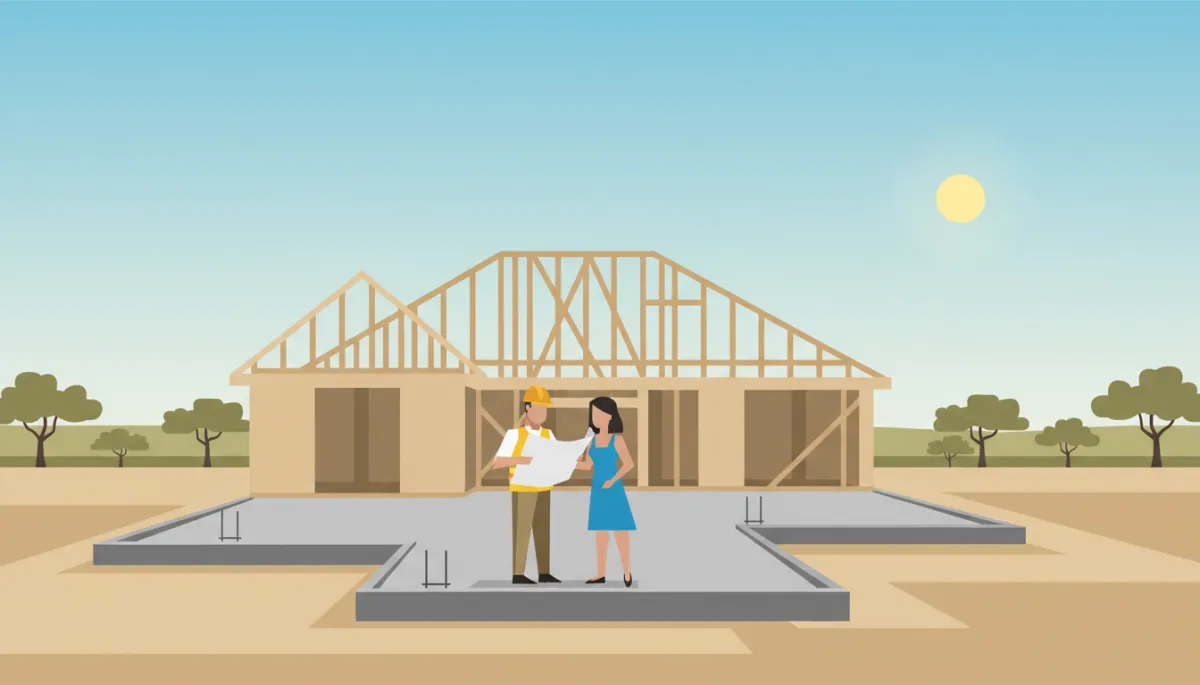
USDA loans help families build on rural lots with no down payment.
Whether you are considering USDA, FHA, VA, or Conventional, one of the most important decisions is how your construction and permanent financing are structured. That is where the choice between one-time close and two-time close comes in.
6. One-Time Close vs. Two-Time Close
Comparing Your Construction Loan Structures
When financing a new build, you will often choose between a one-time close construction-to-permanent loan and a two-time close structure. With a one-time close, you complete one loan and pay one set of closing costs. Your interest rate is typically locked upfront, and the loan automatically converts to a permanent mortgage when construction is finished. This structure can save approximately $2,000–$6,000 in closing costs compared with doing separate construction and permanent closings. One-time close options are available with FHA, VA, and Conventional loans.
A two-time close involves one loan for construction and a second, separate loan for the permanent mortgage. While this can provide more flexibility—for example, if you want to choose your permanent financing later or expect your financial profile to change—it almost always results in higher total costs because you pay closing expenses twice. For that reason, most Rio Grande Valley clients building with South Texas Builders tend to benefit more from a one-time close structure, especially when they want predictable costs and a smoother process from start to finish.
Once you understand how one-time close financing can lower total costs, the next question is usually how much cash you need to bring to the table for your chosen loan type.
7. How Much Cash Do I Need?
Estimating Your Upfront Costs
Every family’s situation is different, but it helps to look at typical cash needs for the most common loan types. For an FHA construction loan, you can expect to bring 3.5% down plus about 2–5% in closing costs and required reserves. On a hypothetical $200,000 build, that often means approximately $12,000–$18,000 total in cash needed, depending on the final loan structure and exact closing expenses determined by your lender.
For an eligible borrower using a VA construction loan, the picture can look different. Because VA allows $0 down payment, you primarily need to cover closing costs only, which often fall in the range of approximately $3,000–$6,000, depending on the specific loan and property details. This can make VA financing one of the most cash-efficient ways for eligible veterans and active-duty service members to build a home in South Texas.
If you own land free and clear, your land equity may cover some or even all of your required down payment, depending on the appraised value and the lender’s guidelines. In some cases, land equity can significantly reduce the amount of new cash you need to bring in at closing. Because details vary by lender and loan program, it is essential to confirm how your land will be treated in your specific scenario. For a same-day conversation with a local lender who understands construction loans in McAllen and the broader RGV, you can contact South Texas Builders at 956-594-6936. With cash needs in mind, many buyers still have practical questions, which is why clear answers to common FAQs are so valuable.
8. Frequently Asked Questions
Straightforward Answers for RGV Home Builders
Below are answers to some of the most common questions families ask when they begin planning a custom home with South Texas Builders. These responses focus on practical details that matter when you are comparing FHA, VA, Conventional, and USDA construction loans.
1. Can my land equity count as my down payment?
In many cases, if you own your land free and clear, your land equity can be used toward the required down payment for your construction loan. The lender will typically order an appraisal to determine the land’s current value and then apply that value according to their program guidelines. For some borrowers, this means they can build with little or no additional cash beyond closing costs. Because each loan type—FHA, VA, Conventional, or USDA—handles land equity differently, it is important to review your exact situation with a lender familiar with construction financing in the Rio Grande Valley.
2. What credit score do I need for each loan type?
For FHA, borrowers with 580+ credit scores may qualify with 3.5% down, while those between 500–579 may need 10% down. Conventional loans generally look for at least a 620+ credit score, with the best long-term rates often reserved for buyers at 740+. VA and USDA loans do not publish a single fixed minimum score in this context, but local lenders will review your credit to ensure it meets their internal guidelines for risk and approval. South Texas Builders can introduce you to lenders who will explain exactly how your credit profile fits with each program.
3. Can I use a VA loan for new construction in the RGV?
Yes, eligible veterans and active-duty service members can use a VA construction loan to build a new home in the Rio Grande Valley and surrounding areas served by South Texas Builders. You will need a valid Certificate of Eligibility (COE), and a VA-approved lender will structure the loan to cover both the land (if applicable) and the construction costs. South Texas Builders is honored to work with veterans and active-duty military clients across McAllen, Edinburg, Mission, Pharr, Weslaco, Brownsville, Harlingen, San Benito, and nearby communities, coordinating closely with lenders who understand VA construction requirements.
4. How do I check if my lot is USDA-eligible?
USDA loans apply only to eligible rural areas, so the first step is confirming whether your lot falls within a qualifying zone. Many parts of Starr County, outer Hidalgo County, and rural Cameron County are eligible, including locations where South Texas Builders actively builds, such as Rio Grande City and Roma. A participating USDA lender can quickly check your property’s eligibility and review the program’s income limits with you. South Texas Builders can connect you with lenders who work with USDA Rural Development loans on a regular basis.
5. How does South Texas Builders help clients through the loan process?
From the first conversation, South Texas Builders focuses on making financing as straightforward as possible. The team works with FHA, VA, Conventional, Construction-to-Permanent, and USDA loans and offers same-day referrals to trusted local McAllen lenders at no charge. Once you choose a loan path, South Texas Builders coordinates closely with your lender on budgets, timelines, and required documentation. Every home includes free custom blueprints, and the company handles all permits except windstorm if applicable, helping keep your project organized and on track. For additional details on costs and construction options, you can explore their financing and educational resources at south-texasbuilders.com/financing, read more about building costs at south-texasbuilders.com/blog/cost-build-custom-home-mcallen-tx-2025, or review answers to more common questions at south-texasbuilders.com/frequently-asked-questions.
Whether you are leaning toward FHA, VA, Conventional, Construction-to-Permanent, or USDA, the right loan will depend on your credit, savings, eligibility, and where you plan to build. South Texas Builders is licensed and insured in Texas, holds an A+ BBB rating, and has been serving South Texas families since 1992, now operating from 1500 Dove Ave Suite 20, McAllen, TX 78504. The team is ready to help you compare options, understand your numbers, and move from planning to construction with confidence.
South Texas Builders connects you with trusted local McAllen lenders for a same-day referral with zero obligation. To discuss your loan options and next steps for building in the Rio Grande Valley or Alice, call 956-594-6936 and take the first step toward your new custom home.