
Complete Guide: How to Build on Your Own Land in the Rio Grande Valley
Homebuilding, Build On Your Lot, Rio Grande Valley
Complete Guide: How to Build on Your Own Land in the Rio Grande Valley
Many families in Hidalgo, Cameron, and Starr Counties already own land but aren’t sure how to turn it into a finished home. This step‑by‑step guide walks you through what it really takes to build on your own lot in the Rio Grande Valley—from that first site visit to move‑in day.
Can You Build on Your Own Land in South Texas?
Yes—you can absolutely build a home on your own land in the Rio Grande Valley. In fact, it’s very common for families in rural and semi‑rural areas of Hidalgo, Cameron, and Starr Counties to inherit acreage from parents or grandparents and want to finally put a home on it.
A Build On Your Lot (BOYL) program is designed exactly for this situation. Instead of buying a lot in a subdivision, you bring the builder your property—maybe outside La Joya, near Rio Grande City, or in the county between San Juan and Alamo—and they handle the planning, permitting, utilities, and construction on that specific piece of land. It works for:
Families who inherited ranchland or farmland and want to carve out a homesite
Owners of small lots inside or just outside city limits (McAllen, Pharr, San Juan, Brownsville, Harlingen, etc.)
Buyers who recently purchased raw land in Starr County or rural Hidalgo and want a custom home instead of a manufactured home
💡 Free Site Evaluation: South Texas Builders offers a complimentary Build On Your Lot evaluation to tell you what’s possible on your land before you spend a dollar on plans.
Step 1: Evaluate Your Lot’s Buildability
Not every piece of land is immediately ready for a house. A professional site evaluation looks at the details that affect cost, safety, and long‑term durability in South Texas conditions:
Soil type and bearing capacity – Clay, sand, and caliche are common in the RGV. Rocky or expansive soils may require an engineered foundation, which adds cost but protects your home from movement and cracking.
Drainage and grading – With heavy summer storms, proper drainage is critical. The builder will check how water flows across your land and whether re‑grading, swales, or culverts are needed to keep water away from the slab.
Flood zone status (FEMA) – Parts of Hidalgo, Cameron, and Starr Counties fall in FEMA floodplains. If your property is in a regulated flood zone, you’ll need a Floodplain Development Permit and often a higher, elevated slab to meet county and lender requirements, per Hidalgo County’s residential construction guidelines (based on Chapter 232 of the Texas Local Government Code and county floodplain rules).
Access to utilities – Is there an existing water line, sewer, or power pole nearby? Or will you need a well, septic system, and new electrical service? We’ll cover utilities in detail in Step 3, but they’re part of the initial buildability check.
Setbacks and easements – Even in unincorporated Hidalgo County, subdivision rules and county standards require minimum distances from property lines—often around 25 ft front, 6 ft side, and 15 ft rear, with larger setbacks along major roads. Easements for drainage or utilities can also limit where you can place the house.
During a free site evaluation, South Texas Builders walks your property with you, reviews soil and drainage, checks FEMA maps, and talks through utilities and access so you know early whether your land is ready—or what it will take to get it there.
Step 2: Verify Zoning and Permits
The next step is understanding who regulates your land and which permits you’ll need. In the RGV, this depends on whether your property is inside city limits, in a city’s ETJ (extra‑territorial jurisdiction), or in unincorporated county areas.
City vs. County in the RGV
Unincorporated Hidalgo County – The county generally does not have traditional zoning, so land uses are flexible. However, subdivision rules, setbacks, and floodplain regulations still apply. You must submit a Development Application and, if in a flood zone, a Floodplain Development Permit, as outlined on the Hidalgo County residential requirements page (hidalgocounty.us).
Cameron County – Outside city limits, the county regulates building through a valuation‑based permit system. Fees depend on construction type and square footage—for example, around $65 per sq. ft. for brick veneer homes on slab, plus processing and plan review fees, according to Cameron County’s 2024/2025 building regulations (cameroncountytx.gov). (Note: this figure is the county's permit valuation rate, not South Texas Builders' construction price — see our real rates above.)
Cities like San Juan, McAllen, Brownsville, Harlingen – Inside city limits or ETJs, you must follow full municipal zoning and building codes. The City of San Juan, for example, bases permits on International Code Council valuation tables and provides a GIS map to check zoning and utilities (sjtx.us). Brownsville has also proposed additional capital recovery fees on new construction permits, so it’s important to confirm the latest requirements directly with the city.
A Build On Your Lot builder will typically pull the permits for you. They coordinate with Hidalgo or Cameron County, or with city departments, prepare site plans, pay permit fees, and schedule inspections so you don’t have to navigate multiple offices on your own.
Step 3: Determine Utility Connections
Utilities are one of the biggest differences between building in town and building on family land out in the county. The main questions are water, sewer, electricity, and gas.
Water – In cities or close‑in subdivisions, you’ll usually connect to city water or a water supply corporation. In rural Starr County or western Hidalgo, you may need a water well. Your builder can coordinate with licensed well drillers and ensure the home’s plumbing and pressure systems are sized correctly.
Sewer vs. septic – Where city sewer is unavailable, a septic system is common. That requires a site evaluation, soil test, and design by a licensed septic professional. Your home’s footprint and driveway layout must leave enough space for the tank and drain field, which is another reason to plan early with a BOYL builder.
Electricity – In rural areas, you may need a new service drop, additional poles, or even an easement to bring power from the nearest line. The builder works with the local utility (like AEP or Magic Valley Electric Cooperative) to design and schedule this work.
Natural gas vs. propane – Many city neighborhoods have natural gas; rural homes often rely on propane tanks. Your decision affects appliance choices, yard layout, and long‑term operating costs.
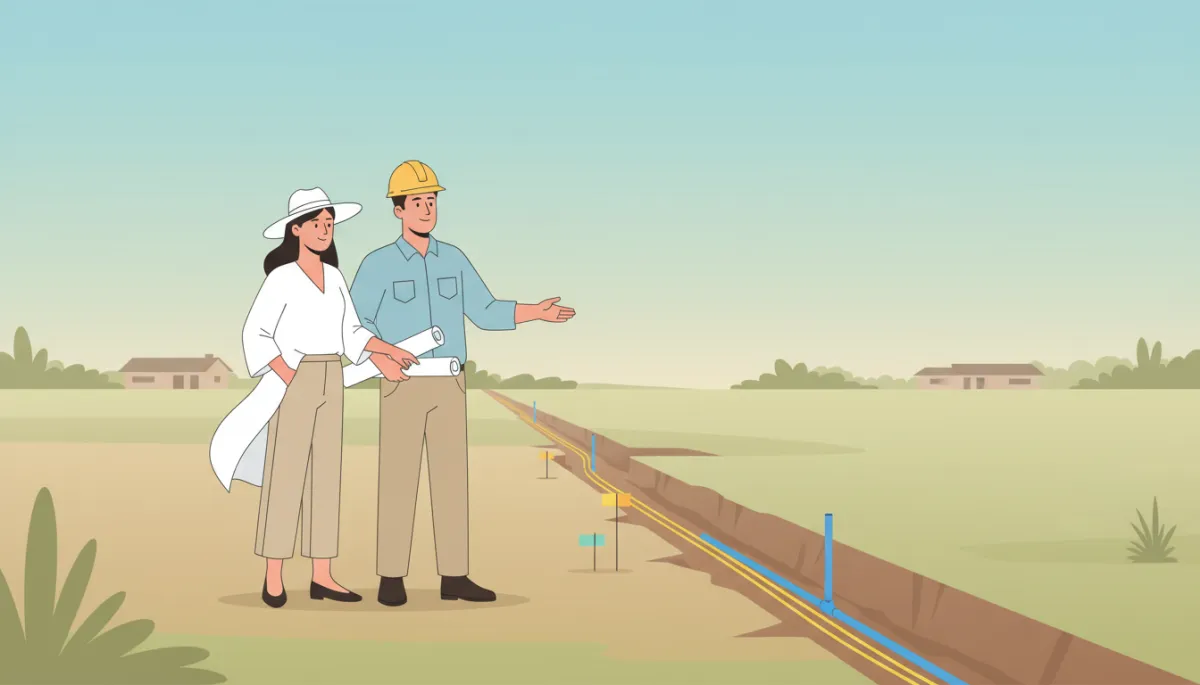
Planning utilities early prevents costly surprises once construction is underway.
📌 Key Takeaway: In rural RGV areas, well and septic design are just as important as the house plans. Choose a builder who routinely coordinates these systems.
Step 4: Design Your Home for the Lot
With the land and utilities understood, you can design a home that truly fits your property instead of forcing a standard subdivision plan onto a unique lot. Important considerations include:
Lot shape and dimensions – Long, narrow tracts along county roads may call for a front‑to‑back layout, while wider parcels allow for courtyard or side‑entry garage designs. Corner lots in cities must respect larger street setbacks and visibility triangles at intersections.
Orientation and sun – In the RGV heat, it pays to limit large west‑facing windows and use covered porches or patios. A good designer will position living areas to capture breeze and shade while protecting bedrooms from road noise and afternoon sun.
Setbacks and driveways – County and city setback rules, plus the location of existing gates and caliche drives, influence where you can place the garage and front door. In flood‑prone areas, the home may need to sit higher than the road, which affects driveway slope and entry steps or ramps.
Many Build On Your Lot clients start with a proven floor plan and then customize it—flipping the layout, stretching rooms, or adding porches—to match their specific lot in Mission, Weslaco, Rio Grande City, or Los Fresnos.
Step 5: Finance a Build‑on‑Your‑Lot Project
Financing a home on your own land is different from buying a finished home—but it doesn’t have to be complicated. The biggest advantage many RGV families have is land equity.
Using land equity as your down payment – If you own your land free and clear, a lender can often count its appraised value toward your required down payment. For example, if your land is worth $60,000 and your total project is $300,000, that equity may satisfy or greatly reduce your cash down requirement.
Construction‑to‑permanent loans – Most BOYL projects use a single loan that funds construction in stages (called “draws”) and then converts into a regular 30‑year mortgage once the home is complete. During construction, you typically pay interest only on the amount disbursed so far.
FHA, VA, and USDA options – Many RGV buyers qualify for government‑backed programs. USDA loans are especially popular in eligible rural areas of Hidalgo, Cameron, and Starr Counties, offering low or no down payment options. VA loans support eligible veterans and service members, and FHA can help buyers with more flexible credit requirements.
💡 Financing Help: South Texas Builders works with RGV lenders who specialize in construction and Build On Your Lot loans and can connect you directly through our Financing page.
Common Challenges (and How We Solve Them)
Building on raw or inherited land can come with surprises. An experienced BOYL builder in the RGV anticipates these issues and designs solutions from the start.
Rocky or unstable soil – In areas with caliche or variable soils, a structural engineer may recommend deeper beams, piers, or a post‑tension slab. This costs more up front but protects your home from foundation problems in the long run.
Flood‑prone property – If FEMA maps show your Starr County or Cameron County land in a floodplain, we work with surveyors to establish finished floor elevations, design an elevated slab, and secure the necessary floodplain permits from the county or city. This can also help lower long‑term flood insurance costs.
Rural utilities – Coordinating well drilling, septic design, power poles, and driveway access can be overwhelming. A BOYL builder manages the schedule and works with trusted local trades so that utilities are ready when the house needs them—without months of delay.
📌 Real‑World Example: On a ranch outside Rio Grande City, a family’s homesite needed an engineered slab and a longer power run than expected. By identifying this during the free site evaluation, the builder adjusted the budget and layout before the owners applied for financing, preventing last‑minute cost overruns.
How Much Does It Cost to Build on Your Own Land in the RGV?
Total cost depends on three main pieces: construction of the home itself, site preparation, and utilities. Here are South Texas Builders' real 2026 construction rates for our Fully Loaded standard — not a generic statewide estimate: $115–$120 per sq ft in Hidalgo & Starr County, $120–$130 per sq ft in Cameron County, and $130–$145 per sq ft in Alice and the Coastal Bend. For a 1,800 sq ft home, that's a construction budget between $207,000 and $261,000 depending on your exact region — see our full 2026 Cost Guide for a size-by-size breakdown. Site preparation and utility costs come on top of this and vary by lot; your free site evaluation will give you a specific range for your property.
1. Construction Costs
For a 1,800 sq. ft. mid‑range home, that might mean a rough construction budget of $210,000–$134,000, depending on finishes, roof type, and structural requirements. Larger porches, upgraded kitchens, and higher‑end exteriors add to this number.
2. Site Prep and Utilities
Clearing brush, grading, and building a driveway
Well and septic (where needed), or tap fees for city water and sewer
Power service, poles, transformer, and possibly a propane tank
These items can range from relatively modest in a platted subdivision to tens of thousands of dollars on a raw tract far from existing utilities. That’s why a detailed cost breakdown—and a 10–20% contingency—is essential at the planning stage.
3. How Owning the Land Helps Your Budget
The good news: because you already own the land, you’re not paying today’s lot prices on top of construction. Your land equity often counts as your down payment and can offset some of the extra cost of site work or utilities. Many families find that building on their own land lets them afford a better home than they could by buying a lot and house package in a subdivision.
💡 Want specific numbers? Use our detailed Cost Guide to see sample budgets for homes built on rural and in‑town lots across the RGV.
FAQ: Build On Your Lot in the Rio Grande Valley
1. Can I build on my land if it’s outside city limits in Hidalgo, Cameron, or Starr County?
In most cases, yes. Unincorporated areas generally allow residential use, but you still must follow county subdivision rules, setbacks, and floodplain regulations. A builder familiar with county requirements will help you secure the correct Development Application and any necessary floodplain permits.
2. What if my land doesn’t have utilities yet?
That’s very common on inherited or agricultural land. Your builder can coordinate water well drilling or water line extensions, design and permit a septic system, and work with the electric company to bring in service. These costs are built into your overall construction budget and loan.
3. How long does it take to build on my own lot?
Timelines vary by city and county. Plan for 30–90 days for design, financing, and permits, and 6–9 months for construction on a typical single‑family home, depending on weather and material availability. Rural utility coordination can add a few weeks if new lines or wells are required.
4. Do I need to hire my own architect or engineer?
Not usually. Most Build On Your Lot programs provide in‑house plans or partner with designers who adapt existing floor plans to your land. When an engineered foundation or septic design is required, the builder brings in licensed engineers as part of the process so you don’t have to manage multiple separate contracts.
5. How do I get started if I’m not sure my land is buildable?
Start with a free site evaluation. South Texas Builders will visit your property anywhere in Hidalgo, Cameron, or Starr County, review access, drainage, flood zone status, and utilities, and give you a realistic picture of what it will take to build there. From there, we can connect you with lenders, share sample floor plans, and outline a clear path from raw land to keys in hand.
Ready to Build on Your Land in the RGV?
Whether your property is a one‑acre lot on the edge of San Juan, a family tract in rural Starr County, or a piece of land in Cameron County outside Brownsville or Harlingen, building on your own lot is absolutely possible with the right guidance. A Build On Your Lot partner handles the details: site evaluation, zoning and permits, utilities, design, financing coordination, and construction management—so you can focus on choosing the home that fits your family and your land.
Explore our Build On Your Lot service page, review financing options on our Financing Guidance page, and browse our South Texas location and services pages for Hidalgo, Cameron, and Starr Counties—then schedule your free site evaluation to see exactly what’s possible on the land you already own.